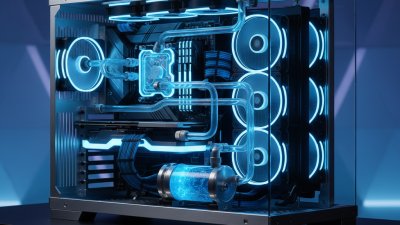
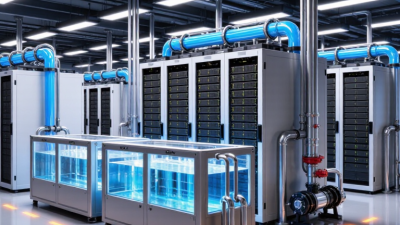
Global sourcing of Watercooling Parts now requires more than comparing prices on a spreadsheet. AI servers, gaming PCs, and compact workstations generate more heat in smaller spaces. The MarketsandMarkets report, Data Center Liquid Cooling Market, projects growth from approximately USD 4.65 billion in 2024 to USD 12.76 billion by 2029. Its estimated compound annual growth rate is 22.3%. That expansion creates opportunity, but also increases sourcing mistakes. A cheap pump with weak bearings can fail beside an expensive graphics card. A poorly specified radiator may look impressive and perform poorly.
Roger Schmidt, an IBM Distinguished Engineer and long-time liquid-cooling specialist, has said, “Liquid cooling is not a new technology. It has been around since the 1960s.” The point still matters. Proven technology does not guarantee reliable parts. Material compatibility, coolant chemistry, pressure ratings, fin density, noise levels, and leak testing remain practical concerns. ASHRAE TC 9.9 guidance also emphasizes thermal management, environmental conditions, and equipment reliability in data-center applications. Those principles apply to smaller systems too, although the operating conditions differ.
This guide examines ten purchasing decisions for global sourcing. It considers copper versus aluminum, pump curves, tube standards, fittings, seals, packaging, certifications, supplier audits, and sample testing. Documentation matters. So does evidence from real production. Ask for measured flow data, not only marketing claims. Inspect threads and O-rings closely. A small mismatch can stop assembly. My own caution is simple: supplier diversity looks efficient until quality control becomes fragmented. Watercooling Parts should be evaluated as a complete thermal system, not as isolated catalog items. Performance is designed. Reliability is verified. Mistakes are expensive.
Choosing watercooling parts for global sourcing starts with the heat problem, not the catalog. Define the target thermal load, operating temperature, and expected workload first. A workstation, server, and industrial controller need different cooling margins. Record ambient temperature, airflow limits, noise tolerance, and available installation space. Small details matter. A radiator may fit physically but restrict maintenance access. Pump capacity should match tubing length, elevation, and flow resistance. Select the reservoir, fittings, tubing, radiator, fans, and coolant as one system.
Material compatibility deserves careful attention. Metals, seals, and coolant additives can react over time, especially in warm environments. Request material specifications, pressure ratings, dimensional drawings, and test records from suppliers. Check thread standards and connector tolerances before ordering samples. I once underestimated fitting variations across factories, which caused unnecessary assembly delays. That mistake was avoidable.
Sourcing priorities should include stable quality, clear documentation, lead time, packaging strength, and replacement availability. Ask for batch traceability and inspect samples under realistic pressure conditions. Run a leak test before shipment, then repeat it after transport vibration. Consider local import rules, safety documentation, recycling requirements, and coolant handling guidance. The lowest unit price can hide higher testing and warranty costs. Build a comparison sheet with weighted scores, not personal preference. Leave room for revision; cooling assumptions often change after the first prototype.
Choosing watercooling parts for global sourcing requires more than comparing prices. I have learned to start with system dimensions, coolant type, operating temperature, and local thread standards. A radiator should match the heat load and fan size, not just look thick. Check fin density, copper or aluminum construction, port location, and pressure-test records. Dense fins may cool well, but they can restrict airflow and increase noise.
Pump selection should follow the actual resistance of the loop. Review the pump curve, flow range, power input, and dry-run protection. A reservoir needs a secure cap, clear level markings, and a reliable inlet design that limits air bubbles. Small details matter. A poorly positioned inlet can create persistent turbulence. I once underestimated this issue, and bleeding the loop took far longer than planned.
For blocks, inspect cold-plate flatness, internal channel design, mounting pressure, and contact compatibility with the target processor or component. Fittings deserve equal attention. Confirm thread type, outer diameter, seal material, bend radius, and torque guidance. G1/4 and NPT are not interchangeable. Request production samples before placing a large order, then perform leak tests, thermal tests, and repeated installation checks. Ask suppliers for material declarations, dimensional drawings, batch traceability, and packaging specifications. Packaging is often overlooked. A damaged fitting can stop an entire assembly line. Pricing still matters, but inconsistent tolerances may cost more than the original savings.
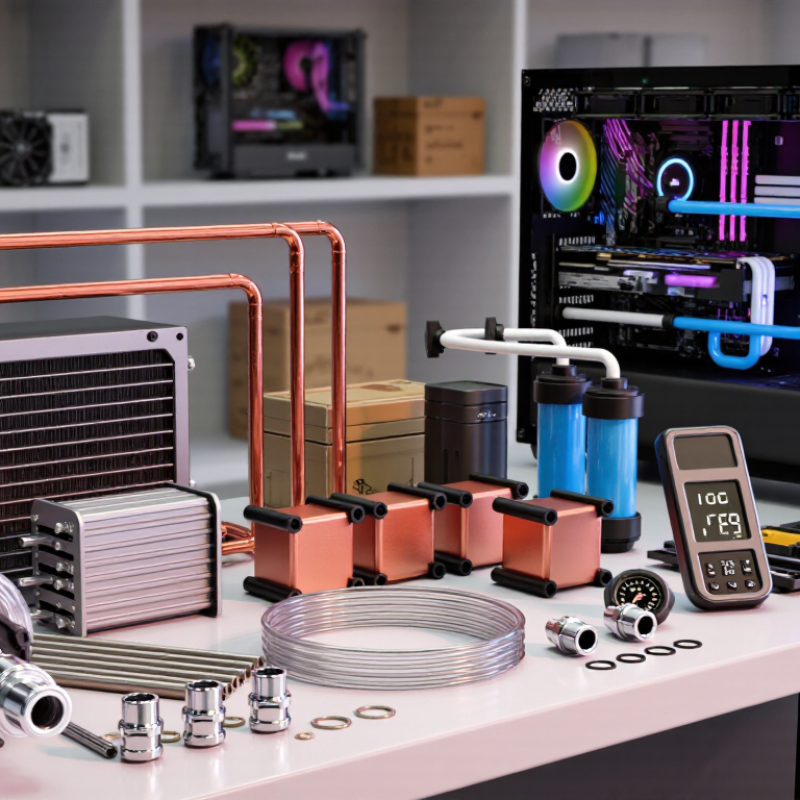
This benchmark compares common watercooling components across cooling impact, sourcing standardization, shipping practicality, installation compatibility, and maintenance requirements. Radiators provide broad cooling capacity but are bulky, while fittings and blocks benefit from widely used G1/4-inch connection standards. Pumps and reservoirs should be evaluated together for flow reliability, mounting options, and leak-prevention needs.
10 Tips for Choosing Watercooling Parts for Global Sourcing
Tip 1: Check material compatibility before comparing prices. Copper blocks, aluminum radiators, brass fittings, and nickel coatings can react in mixed loops. Galvanic corrosion may appear slowly, like dull flakes inside a fitting. Tip 2: Request clear material declarations and coating details from each supplier. Do not rely on vague terms such as “premium metal.” Tip 3: Match tubing, seals, and coolant carefully. EPDM and silicone may behave differently under heat, pressure, and chemical exposure.
Tip 4: Review real performance data, not attractive cooling claims. Ask for flow-rate curves, pressure-drop readings, thermal test conditions, and fan-speed settings. A radiator tested in a quiet room may perform differently in a compact enclosure. Tip 5: Inspect pump head pressure and operating noise together. High flow is not always useful if the pump becomes disruptive. Tip 6: Test samples before placing a large international order. Check leaks, thread accuracy, surface finish, and temperature stability over several operating cycles. One sample is helpful, but it is not proof.
Tip 7: Confirm dimensional tolerances with technical drawings. A two-millimeter mismatch can stop installation. Tip 8: Examine quality-control records, batch inspection methods, and pressure-test procedures. Photos are useful, but traceable records are stronger evidence. Tip 9: Clarify packaging for long-distance transport. Threads, acrylic parts, and delicate fins need separate protection. Tip 10: Keep a written comparison sheet for materials, performance, quality, warranty terms, and replacement support. I have seen buyers overlook documentation while focusing on unit cost. That mistake can become expensive. Recheck every assumption.
Practical comparison of common watercooling materials, component specifications, compatibility risks, and quality-control checkpoints.
| Part Category | Recommended Material or Configuration | Typical Engineering Data | Material Compatibility | Performance Considerations | Quality-Control Checks for Sourcing | Sourcing Assessment |
|---|---|---|---|---|---|---|
| Cold Plate / Water Block | Oxygen-free copper or copper with a nickel-plated surface | Thermal conductivity of copper: approximately 385–400 W/m·K at room temperature. Nickel plating is commonly applied at a thin, controlled thickness. | Good Suitable for copper, brass, stainless steel, EPDM, and silicone systems when the coolant is properly inhibited. |
High copper conductivity supports efficient heat transfer. Microchannels can improve thermal performance but increase pressure drop and contamination sensitivity. | Verify copper grade, plating coverage, plating adhesion, flatness, channel dimensions, pressure resistance, leak testing, and burr-free coolant passages. | Preferred |
| Radiator | Copper or brass wetted channels with copper fins; aluminum designs should remain in an aluminum-only loop | Copper conductivity: approximately 385–400 W/m·K. Aluminum conductivity: approximately 205–237 W/m·K. Thermal performance also depends on fin density and airflow. | Check Carefully Do not mix bare aluminum with copper or brass in the same loop without a validated corrosion-control system. |
Larger radiators and greater airflow generally increase heat dissipation. High fin density requires stronger airflow and may increase noise. | Check tube and fin material, soldering or brazing quality, fin damage, dimensional accuracy, pressure test results, internal cleanliness, and corrosion-resistance documentation. | Select by Loop |
| Pump | Brushless centrifugal pump with a ceramic shaft or ceramic bearing where applicable | Evaluate the full pump curve rather than maximum flow alone. Typical compact-loop requirements may range from approximately 1–5 L/min, depending on restriction and system design. | Good Use coolant-compatible wetted plastics, elastomers, ceramics, and metals. Avoid unverified materials in long-term contact with glycol or inhibitors. |
System flow is determined by the intersection of the pump curve and loop resistance. Head pressure is often more useful than free-flow rating for restrictive systems. | Verify flow-versus-head curve, power input, operating voltage, noise, vibration, dry-run protection, continuous-duty rating, connector safety, and endurance-test results. | Curve Required |
| Reservoir | Transparent polycarbonate, acrylic, or POM/acetal with chemically compatible seals | Engineering plastics usually have much lower thermal conductivity than metals; their primary functions are containment, visibility, and mounting rather than heat transfer. | Chemical Check Polycarbonate can be sensitive to some solvents and stress cracking. Acrylic requires careful handling to avoid cracking and crazing. |
Reservoir volume has limited direct impact on cooling capacity. Proper air separation and easy filling are more important than oversized volume. | Inspect transparency, molding quality, thread accuracy, crack resistance, seal compression, mounting strength, pressure leakage, and compatibility with the intended coolant. | Suitable |
| Fittings | Nickel-plated brass, stainless steel, or compatible polymer fittings | Brass thermal conductivity is typically about 100–120 W/m·K; stainless steel is approximately 14–16 W/m·K. Thermal conductivity is less important than sealing and corrosion behavior. | Good Nickel-plated brass is commonly used with copper systems when plating is intact. Avoid exposed dissimilar metals without corrosion evaluation. |
Internal bore, bend radius, and fitting geometry influence pressure drop. Excessively narrow passages can restrict flow. | Check thread standard, thread gauge, plating thickness and adhesion, O-ring groove dimensions, torque behavior, burrs, pressure rating, and leak-test results. | Verify Threads |
| Soft Tubing | EPDM or silicone tubing selected for the coolant and temperature range | Common internal diameters include approximately 10–13 mm for compact systems, but the exact size must match the fittings. EPDM is generally more suitable for long-term aqueous coolant service than general-purpose PVC. | Good EPDM has broad compatibility with water and many glycol-based coolants. Silicone is flexible but may be more permeable and easier to kink. |
Inner diameter affects flow resistance. Wall thickness affects kink resistance, bend radius, and pull-off security. | Measure inner and outer diameter, Shore hardness, wall thickness, elongation, kink resistance, odor, extractables, dimensional stability, and pressure leakage after aging. | Preferred |
| Hard Tubing | PETG or PMMA/acrylic tubing; use a validated material for the target temperature | Typical outside diameters include approximately 12, 14, or 16 mm. PETG is easier to form; acrylic generally offers higher rigidity and optical clarity. | Temperature Sensitive Verify resistance to the coolant, cleaning agents, heat, and mechanical stress. Do not assume all transparent plastics have the same chemical resistance. |
Hard tubing provides clean routing and stable geometry but requires accurate cutting, deburring, bending, and alignment. | Check outer diameter tolerance, roundness, wall thickness, surface defects, transparency, heat-forming consistency, dimensional recovery, and fitting retention. | Validate |
| Seals and O-Rings | EPDM for water-based coolants; FKM only where its chemical and temperature advantages are required | Seal performance depends on hardness, compression, temperature, fluid chemistry, and groove design. Common O-ring hardness ranges are approximately 70–80 Shore A. | Good EPDM is generally compatible with water and glycol mixtures but is not suitable for many petroleum oils. FKM compatibility must also be confirmed for the selected coolant. |
Correct compression and groove dimensions are more important than hardness alone. Over-compression can increase assembly force and damage seals. | Verify material certificate, hardness, cross-section, dimensional tolerance, surface finish, compression set, swelling after fluid immersion, and leak-test performance. | Control Closely |
| Coolant | Distilled or deionized water with a validated corrosion inhibitor and biocide package | Water has high heat capacity, approximately 4.18 kJ/kg·K near room temperature. Glycol improves freeze protection but generally reduces heat capacity and increases viscosity. | System Specific Match the inhibitor package to all wetted metals, plastics, elastomers, and coatings. Avoid mixing incompatible coolant formulations. |
Clean coolant, adequate flow, and corrosion control are more important than decorative color. Higher viscosity can increase pump load and pressure drop. | Request pH range, inhibitor chemistry, glycol concentration if applicable, electrical conductivity target, microbial-control method, shelf life, batch traceability, and compatibility test results. | Test Before Use |
| Filters and Drain Components | Removable mesh filter, corrosion-resistant drain valve, and compatible threaded connectors | Filter mesh selection is a balance between particle capture and pressure drop. A finer mesh provides greater filtration but can restrict flow more quickly. | Good Use materials compatible with the loop metals and coolant; avoid coatings that can flake into the system. |
Filters should be serviceable and positioned where they can be inspected without introducing contamination or excessive air into the loop. | Check mesh integrity, housing pressure resistance, valve sealing, thread accuracy, cleanability, particle-shedding risk, and repeated open-close durability. | Useful |
| Assembly and Packaging | Clean-room-like handling for wetted parts, protective caps, sealed bags, and moisture-resistant cartons | There is no universal packaging specification; packaging should prevent dust, moisture, impact, deformation, and mixed-part contamination during international transport. | Essential Packaging materials must not release contaminants or react with elastomers, coatings, or transparent plastics during storage. |
Clean components reduce clogging, pump wear, staining, and early coolant degradation during commissioning. | Define incoming cleanliness limits, protective caps, lot coding, barcode traceability, drop testing, humidity protection, inspection records, and export-carton requirements. | Mandatory |

For global watercooling sourcing, compare suppliers beyond catalog prices. The IEA’s Energy and AI report estimates data centers consumed 415 TWh in 2024, with demand potentially reaching 945 TWh by 2030. That pressure makes efficient pumps, radiators, cold plates, tubing, and fittings increasingly important. Ask each supplier for flow-rate curves, thermal resistance results, leak-test records, material specifications, and batch traceability.
Certification evidence should be specific. Request CE conformity documents, RoHS and REACH declarations, and relevant safety reports for pumps or electrical assemblies. Do not accept a logo alone. ISO’s 2023 Survey recorded more than 1.26 million ISO 9001 certificates worldwide, yet certification does not guarantee stable process control. Audit sample reports, inspection plans, corrective-action records, and factory capacity. Check the details.
Pricing needs a complete cost model. Compare tooling, packaging, freight, duties, testing, replacement rates, and payment terms. A cheaper fitting may use thinner walls or inconsistent threads. That becomes costly after installation. Minimum order quantity also matters. Negotiate pilot quantities, mixed models, staged deliveries, and clear defect-replacement terms. One common mistake is comparing unit prices before confirming specifications. It feels efficient. It is not. Suppliers should quote the same pressure rating, connector standard, material grade, warranty period, and delivery schedule. Recheck assumptions before signing.
Global sourcing of watercooling parts demands more than comparing prices. Request production samples before approving a purchase. Check machining marks, O-ring compression, thread accuracy, and weld quality. Run a leak test at the intended operating pressure.
Shipping conditions can damage good components. Specify capped ports, sealed bags, impact protection, and temperature limits. Record package weight and inspect every carton on arrival. A small moisture indicator inside the box can reveal poor handling. ASHRAE TC 9.9 guidance emphasizes coolant quality, material compatibility, and controlled operating conditions. These details affect corrosion and long-term thermal performance.
Support must be measurable. Ask for response times, replacement procedures, test records, and spare-part availability. Confirm the supplier can provide drawings and material certificates. Uptime Institute’s 2024 Global Data Center Survey reported that power-related failures remain a major source of serious outages, showing why cooling reliability cannot be treated separately.
Select parts tested through pressure cycles, thermal cycles, and coolant exposure. My own sourcing mistake was trusting a sample without checking its shipping seals. The part arrived clean, but the internal fitting had shifted.
Samples need real-world tests. Not just photographs.
Review warranty terms, batch traceability, and field-failure feedback every quarter. Long-term reliability is built through evidence, not confident promises.