Leave Your Message

Best Watercooling Radiator Manufacturers in China

Choosing a Watercooling Radiator manufacturer in China takes more than comparing prices and product photos. Buyers need to understand how a supplier controls materials, production, and quality checks. China has manufacturers with different capabilities, from standard copper and aluminum models to custom radiator designs. Their services and processes can vary considerably.

A polished catalog is not proof of consistent performance. Ask about fin and tube materials, dimensions, port options, and compatibility with your intended cooling loop. Find out how each unit is checked for leaks and pressure resistance. Request clear specifications, sample results, and details about inspection procedures. Details matter. If possible, examine a sample and verify its fit, finish, and packaging before placing a larger order. A radiator may look excellent on a product page yet require changes to suit a real installation.

This guide introduces ways to assess leading Watercooling Radiator manufacturers in China, including their product range, customization options, production experience, and communication practices. It also considers practical factors such as minimum order quantities, lead times, and after-sales support. No single checklist captures every concern; the right supplier depends on your design and purchasing needs. Use the comparisons as a starting point, then confirm important claims directly with each manufacturer.
Best Watercooling Radiator Manufacturers in China

Overview of Water-Cooling Radiators and Their Applications

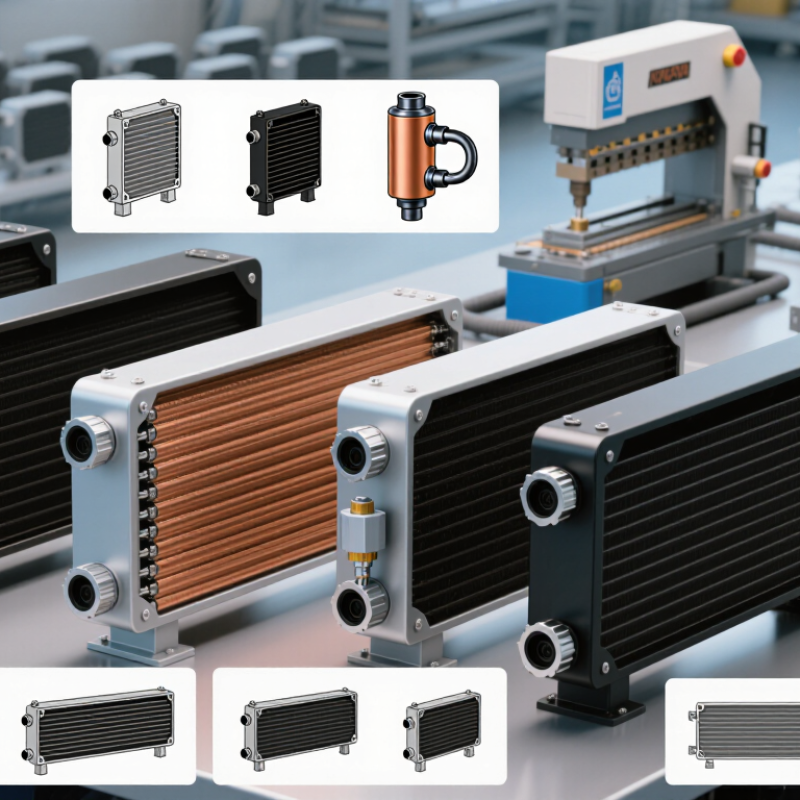
A water-cooling radiator transfers heat from circulating coolant to surrounding air. Its core channels carry warm liquid, while thin fins increase the surface area exposed to airflow. Fans help when natural convection is not enough. Small details matter. In computer systems, industrial machinery, and some energy-storage equipment, radiator size and airflow affect operating temperatures. The right design depends on heat load, ambient conditions, coolant flow, and available space—not just the number of fins.

The International Energy Agency’s Electricity 2024 report estimates that data-centre electricity consumption could reach 620–1,050 TWh in 2026, compared with about 460 TWh in 2022. This projection highlights growing pressure to manage heat efficiently, but it does not directly measure radiator demand.

In practice, engineers should check pressure drop, fan noise, fitting access, and corrosion compatibility before choosing a unit. A radiator that performs well in a test room may behave differently in a dusty cabinet or a hot workshop. That assumption is imperfect. Regular inspection also matters: trapped air, blocked fins, or aging coolant can quietly reduce heat transfer.
China’s Water-Cooling Radiator Manufacturing Industry

China’s water-cooling radiator manufacturing industry serves automotive, industrial, and data-center applications. Its scale is supported by a substantial vehicle market: the China Association of Automobile Manufacturers reported 30.16 million vehicles produced in 2023. That volume creates demand for dependable heat exchangers, although vehicle output alone does not reveal radiator quality or supplier capability.

Manufacturing performance depends on details that are easy to overlook. Tube-fin brazing, clean coolant channels, pressure testing, and corrosion-resistant materials all affect service life. Buyers should request test methods, material specifications, and traceable inspection records, rather than relying on production capacity claims. Small flaws matter.

Demand is also shifting toward systems that manage higher heat loads. The International Energy Agency’s Energy and AI report estimates data centers used about 415 TWh of electricity worldwide in 2024, with consumption projected to approach 945 TWh by 2030. This is not a direct forecast for radiator sales, but it signals growing attention to cooling efficiency. China has manufacturing depth; consistency between batches remains a point worth checking.

Key Criteria for Evaluating Chinese Radiator Manufacturers

Selecting a Chinese watercooling radiator manufacturer starts with test conditions, not catalogue claims. Ask for heat-rejection results at stated water temperatures, flow rates, and airflow. Compare pressure drop, too; a radiator that transfers heat well but restricts flow may burden the whole system. ASHRAE Standard 33 provides test methods for rating air-cooling coils. It offers a useful reference, though it does not replace application-specific testing.

Inspect materials and production controls. Request alloy specifications, fin and tube dimensions, leak-test procedures, and batch traceability. For a sample, check weld consistency and inspect the fin pack for bent sections or uneven spacing. Ask how the supplier verifies corrosion resistance and repeatability across production runs. A polished catalogue is not proof. No single test tells the whole story.

System efficiency matters, but avoid treating broad data as a component rating. Uptime Institute’s 2024 Global Data Center Survey reported an average power usage effectiveness (PUE) of 1.56 among respondents. That figure describes whole-facility performance, not radiator efficiency. It does show why buyers should evaluate the radiator within its operating system. I would still hesitate to approve a supplier based on one strong prototype; production consistency deserves equal scrutiny. Request recent test reports, sample results, and clear warranty terms before comparing quotes.

Best Watercooling Radiator Manufacturers in China - Key Criteria for Evaluating Chinese Radiator Manufacturers

Evaluation Criterion What to Assess Evidence to Request Why It Matters
Materials and construction Confirm the materials used for the tubes, fins, end tanks, and fittings. Common radiator constructions include copper/brass and aluminum; the choice affects weight, cost, corrosion behavior, and heat transfer. Material specifications, drawings, and material inspection records for the proposed model. A clear bill of materials helps verify that the supplied product matches the design and intended application.
Thermal performance data Check whether performance results identify test conditions, including coolant flow, air flow, inlet temperatures, and ambient conditions. Results are meaningful only when test methods and conditions are stated. A test report or test protocol for the relevant radiator size and configuration. Comparable test conditions make it easier to assess performance claims for the intended cooling system.
Dimensions and fit Review overall dimensions, core thickness, port location and size, mounting points, and fan compatibility. Confirm whether measurements refer to the core or the complete assembly. Dimensioned drawings, interface details, and a sample or first-article inspection plan. Accurate fit information reduces installation issues and avoids costly design changes.
Pressure and leak testing Ask how finished radiators are checked for leakage and whether pressure-test parameters are defined for the product design. Test pressure and procedure should be appropriate to the intended operating requirements. Written inspection procedure, acceptance criteria, and sample production test records. Documented checks help control the risk of leaks in the finished cooling loop.
Corrosion and coolant compatibility Verify material compatibility with the specified coolant and other loop components. Ask about surface treatments, cleaning, and any application-specific corrosion evaluation. Material compatibility guidance and available test documentation for the stated coolant and operating environment. Compatibility matters because dissimilar materials and unsuitable coolant conditions can contribute to corrosion over time.
Manufacturing process control Understand how core assembly, joining, brazing or soldering, finishing, and final assembly are controlled. Check that process controls are relevant to the specific radiator construction. Process flow, inspection checkpoints, and records showing how nonconforming products are handled. Consistent process control supports repeatable product quality across production batches.
Quality management and traceability Evaluate incoming-material checks, in-process inspection, final inspection, corrective-action practices, and batch or lot traceability. Verify any claimed management-system certification independently. Quality procedures, sample inspection records, traceability examples, and current certificates where applicable. Traceable records make it easier to investigate defects and maintain consistent supply quality.
Customization and engineering support Ask whether the manufacturer can support non-standard dimensions, port configurations, mounting features, materials, or packaging, and how design changes are reviewed and approved. A written engineering review process, drawing revision controls, and sample-development plan. Clear technical communication helps ensure custom requirements are understood before production.
Production capacity and lead time Confirm realistic sample and production lead times, minimum order quantities, available capacity, and how schedule changes or supply interruptions are communicated. A production schedule for the requested volume and written order-planning terms. Capacity and lead-time clarity support reliable purchasing and inventory planning.
Packaging and export readiness Review protection for fins, ports, and finished surfaces during handling and shipment. Confirm labeling, packing configuration, and export documentation requirements. Packaging specifications, shipping-mark examples, and a list of documents provided for export orders. Suitable packaging helps reduce transit damage and simplifies receiving and customs processes.
Warranty and after-sales support Read the written warranty for coverage, duration, exclusions, claim evidence, and response process. Confirm how technical questions and quality complaints are handled. Warranty terms, complaint-handling procedure, and expected response times. Defined support terms make responsibilities clearer if a product issue arises.

Note: Request evidence for the exact model and configuration being evaluated. Performance, test procedures, certifications, and production capabilities should be verified directly rather than assumed.

Leading Water-Cooling Radiator Manufacturers in China

Leading Water-Cooling Radiator Manufacturers in China

The IEA’s Electricity 2024 report estimates that data centres used about 460 TWh of electricity worldwide in 2022. It projects demand could exceed 1,000 TWh by 2026. This growth makes heat removal an increasingly important design concern.

For buyers evaluating leading water-cooling radiator manufacturers in China, advertised capacity is only a starting point. Ask for thermal test conditions, coolant flow rates, pressure-drop data, and leak-test records. Results are meaningful only when the test setup resembles the intended system.

Construction details matter. Copper tubes, aluminium fins, brazed joints, and fin spacing affect heat transfer, weight, and service life. A capable manufacturer should explain material choices and provide repeatable performance data, not just a polished catalogue.

Check corrosion protection, pressure resistance, and whether samples match production units. Small details matter. A radiator that performs well on a clean test bench may disappoint when dust, vibration, or uneven airflow appear. Even supplier claims deserve a second look; documentation helps, but independent validation is better.

Comparing Product Quality, Customization, and Export Capabilities

When comparing watercooling radiator manufacturers in China, look beyond polished product photos. Ask for material specifications, fin density, tube dimensions, and documented leak-test procedures. A consistent solder line and clean port threads matter. Small defects can become costly after installation. Request inspection records from recent production batches, not only a carefully prepared sample. A sample is useful, but it cannot prove every batch is consistent.

Customization should fit the cooling loop, not just the catalog. Confirm port position, thickness, mounting-hole spacing, and finish before approving a drawing. Ask whether the factory can provide a prototype and explain its tolerance limits. Clear answers are reassuring. Vague promises are not. I would also check how design changes affect tooling charges and delivery time; this part is easy to underestimate.

Export capability involves more than shipping overseas. Check whether packaging protects delicate fins, whether labels match purchase documents, and whether the supplier provides clear packing lists and shipment updates. Ask about production lead times during peak periods, spare-unit availability, and how quality concerns are handled after delivery. A smooth first shipment is encouraging, though it does not guarantee the next one. Compare written specifications and response times, then weigh them against price.

Watercooling Radiator Material Benchmark

Typical thermal conductivity of common radiator metals, relevant when assessing product materials from manufacturers in China.

Approximate room-temperature thermal conductivity: copper 401, aluminum 237, and brass 109 W/m·K. Actual values vary by alloy and material condition; conductivity alone does not determine radiator performance, customization, or export capability.