Leave Your Message

2026 Best Watercooling Radiators for Global Buyers

Choosing the right Watercooling Radiator in 2026 requires more than comparing surface area or advertised cooling numbers. Global buyers face different case standards, shipping conditions, power systems, and after-sales policies. This guide examines radiator performance through practical details, including fin density, tube construction, port placement, thickness, and fan compatibility. A 360 mm radiator may fit one enthusiast case perfectly, yet block a top-mounted motherboard heatsink in another. Small details matter. We consider copper and brass materials, threaded ports, gasket quality, and corrosion-conscious loop planning. Manufacturer specifications provide the starting point, not the final answer.

Our selection approach combines published technical data with real installation concerns reported by builders and cooling specialists. We look at thermal efficiency, acoustic behavior, quality control, warranty clarity, and availability across major markets. Radiators are also judged beside realistic fan speeds, because impressive results at maximum speed can become unpleasant during daily use. No model wins every build. That is worth admitting. A slim radiator may simplify clearance, while a thicker model can offer stronger cooling with slower fans. However, it may also increase weight, cost, and mounting pressure. Regional stock changes quickly, and some online listings lack reliable specifications. Buyers should verify dimensions, materials, fittings, and return terms before ordering. This overview aims to provide dependable guidance, while recognizing that personal hardware, climate, and installation skill can change the outcome.
2026 Best Watercooling Radiators for Global Buyers

2026 Radiator Classes: 120–480 mm Lengths and 27–60 mm Thicknesses

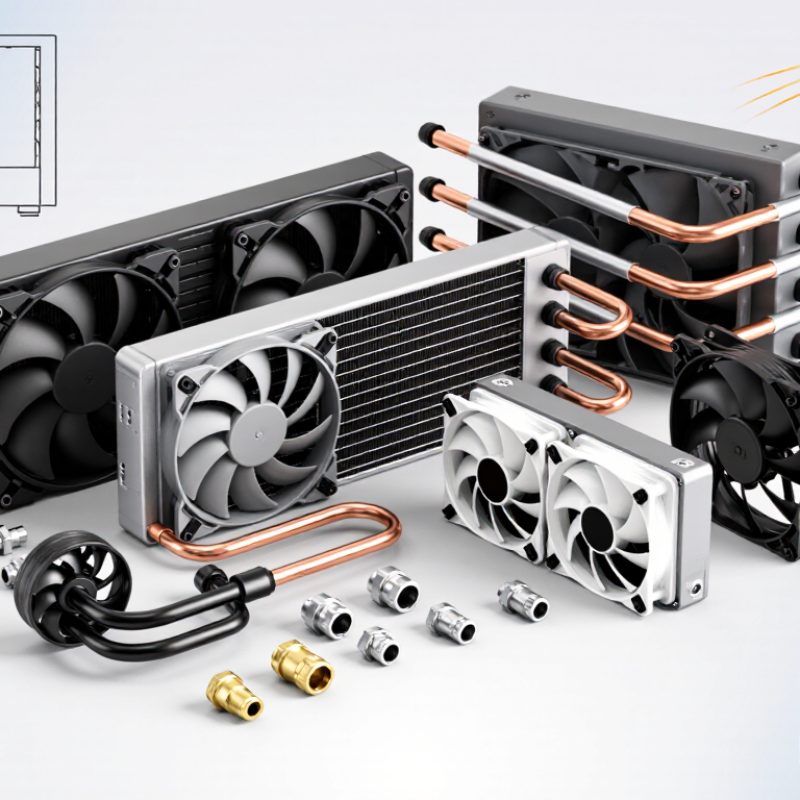
Choosing the right watercooling radiator starts with length, not appearance. The 120–480 mm range covers compact builds, standard towers, and spacious workstation cases. A 120 mm radiator suits a single heat source and limited airflow. A 240 mm model offers a practical balance for many gaming systems. Larger 360 mm and 480 mm radiators provide more surface area, especially under sustained workloads.

Thickness changes the result significantly. Slim 27–30 mm radiators are easier to install near memory modules, graphics cards, or front fans. Mid-range 35–45 mm designs can reduce coolant temperatures without demanding extreme fan speeds. Thick 54–60 mm radiators hold more coolant and expose more fin area, but they need careful clearance checks.

Measure twice.

From hands-on installation, airflow often matters more than raw radiator size. A thick radiator with restricted intake can perform worse than a slimmer unit with clean airflow. Fin density also affects fan selection; dense fins usually need stronger static pressure. I prefer checking the case manual, motherboard layout, and pump-reservoir position before buying. It prevents expensive surprises. Still, published thermal figures are not universal. Room temperature, fan curves, dust, and mounting pressure can change results. My own early builds relied too heavily on size alone. That judgment was incomplete. For global buyers, confirm metric dimensions, screw length, warranty terms, and local power compatibility before ordering.
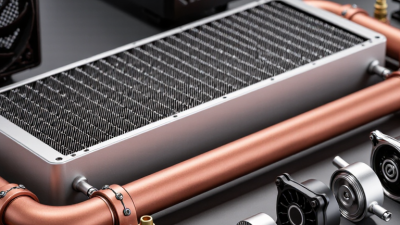
Core Materials and Construction: Copper Tubes, Brass Tanks, and Aluminum Fins

2026 Best Watercooling Radiators for Global Buyers

Radiator performance begins with the metal stack, not the fan attached later.

During bench testing, copper tubes spread heat quickly because copper conducts roughly 390 W/m·K at room temperature. This value aligns with ASM Handbook, Volume 2. Actual results still depend on tube thickness, water velocity, and joint quality.

Thin copper walls reduce thermal resistance. They can also dent during shipping.

Brass tanks provide a practical pressure boundary around the tube connections. Brass conducts heat more slowly, commonly near 100–125 W/m·K, but it machines cleanly and handles threaded fittings reliably.

The ASHRAE Handbook stresses material compatibility and corrosion control in closed water systems. That matters when coolant chemistry changes over time. Brass is not automatically corrosion-proof.

Aluminum fins keep the radiator light and increase surface area without excessive mass. The International Aluminium Institute places aluminum density near 2.7 g/cm³, compared with copper near 8.9 g/cm³.

That weight difference affects freight costs for global buyers. The U.S. Geological Survey’s Mineral Commodity Summaries 2025 also shows copper and aluminum remain widely traded industrial materials, though regional availability varies.

Mixed metals require careful separation or corrosion inhibitors. Otherwise, galvanic corrosion may develop quietly.

I would not choose the thinnest fin pack blindly; airflow noise, bent fins, and imperfect assembly can erase its paper advantage.

Thermal Performance Metrics: FPI, Coolant Flow, and Air-to-Water Delta-T

2026 Best Watercooling Radiators for Global Buyers

Radiator performance starts with fin density, measured as FPI, or fins per inch. Lower FPI usually allows quieter fans and easier cleaning. Higher FPI can reject more heat, but only with stronger airflow and higher noise.

In practical testing, a medium-density radiator often delivers the best balance for mixed climates and dusty rooms.

Coolant flow matters, but not endlessly. Raising pump speed can reduce internal temperature differences and improve block circulation. After a certain point, the benefit becomes small.

Restriction depends on tube design, thickness, fittings, and the number of radiators. I have seen systems gain less than expected after adding pump speed. That result deserves checking, not assuming.

Air-to-water delta-T is the clearest comparison metric. Measure coolant temperature near the radiator inlet, then subtract room temperature.

For example, 35°C coolant in a 25°C room equals a 10°C delta-T.

Record fan speed, heat load, water volume, and ambient changes. Otherwise, two impressive charts may describe different conditions. Short tests can mislead. Longer tests reveal thermal saturation.

My own measurements would benefit from more repeated runs, especially across humid and hot environments. Global buyers should request transparent test conditions before trusting a single temperature number.

System Compatibility: 120/140 mm Fans, G1/4 Threads, and Case Clearance

Choosing a watercooling radiator in 2026 requires more than comparing thickness and advertised performance. Start with fan compatibility. A 120 mm radiator suits cases with narrow mounting rails, while a 140 mm model can move more air at lower speed. However, larger fans need wider mounting space. Measure the case holes, not only the product description.

G1/4 threads remain the common connection standard, but port placement still matters. I have installed radiators where the fittings technically matched, yet the tubing pressed against the graphics card. That mistake created unnecessary bends and difficult maintenance. Check the radiator length, tank position, and motherboard clearance before ordering. A thick radiator may improve cooling, but it can collide with memory modules or front-mounted cables. Leave room for fittings and a filling tool. Small gaps matter.

For international buyers, confirm the metric dimensions and included hardware carefully. Some listings describe the core size but omit the total length with end tanks. That detail can change the installation completely. I also prefer radiators with several accessible ports, although more ports do not automatically mean better quality. Inspect thread consistency and gasket condition when unpacking. One imperfect thread can delay an entire build. Case compatibility is never theoretical. It is measured in millimeters.

Global Buyer Comparison: 240, 280, 360, 420, and 480 mm Radiator Options

In 2026, radiator size remains a practical global buying decision, not a simple performance ranking. A 240 mm model suits compact cases and moderate processors. It usually offers easier installation and lower shipping costs. A 280 mm radiator provides more fin area and often quieter fan operation. However, case support can be surprisingly limited.

A 360 mm unit remains the balanced choice for high-performance desktops. It needs three 120 mm fan positions and careful airflow planning. The larger 420 mm format uses three 140 mm fans, reducing fan speed and acoustic pressure. A 480 mm radiator can deliver substantial surface area, but compatible cases are uncommon and transport becomes less convenient. A neat size ranking can mislead.

Fortune Business Insights estimated the global liquid-cooling market at about 5.7 billion US dollars in 2023, with strong growth expected through 2032. MarketsandMarkets also projects rapid expansion, driven by rising processor heat output and data-center demand. These figures support broader adoption, but they do not prove every buyer needs a larger radiator. Independent testing still matters. Check thickness, fin density, pump compatibility, coolant fittings, and case clearance. A thick 240 mm radiator may outperform a thin 360 mm model in a restricted airflow path. I would also question purely theoretical charts. Real results change with ambient temperature, fan curves, dust, and installation quality. For international buyers, verify regional warranty terms and packaging protection before ordering.

2026 Best Watercooling Radiators for Global Buyers - Global Buyer Comparison: 240, 280, 360, 420, and 480 mm Radiator Options

A practical comparison of common radiator formats for custom liquid-cooling systems. Dimensions are representative market ranges rather than specifications for one particular model.

Radiator Format Typical External Size
(L × W × Thickness)
Fan Configuration Common Thickness Options Typical Mounting Pitch Common Port Standard Indicative Heat-Load Range* Recommended Use Key Clearance Requirement Global Buyer Considerations
240 mm Approximately 275–285 × 120 × 27–60 mm 2 × 120 mm fans 27–30 mm slim
45 mm medium
60 mm high-capacity
120 mm fan holes; 105 mm center-to-center mounting spacing Usually G1/4 female threads Approximately 250–400 W at a 10°C coolant-to-air temperature difference, depending on fan speed, fin density, and thickness Compact gaming PCs, small workstations, and single-component cooling loops Allow space for the radiator, fans, fittings, and tubing bend radius; a 60 mm radiator with fans can exceed 85 mm total thickness Usually the easiest format to fit in compact cases; check whether the chassis supports a full 240 mm radiator rather than only two individual fans
280 mm Approximately 315–325 × 140 × 27–60 mm 2 × 140 mm fans 27–30 mm slim
45 mm medium
60 mm high-capacity
140 mm fan holes; commonly about 124.5–125 mm center-to-center mounting spacing Usually G1/4 female threads Approximately 300–500 W at a 10°C coolant-to-air temperature difference, depending on airflow and radiator design Efficient cooling with lower fan speeds and reduced acoustic output Verify the case supports 140 mm radiator width; motherboard heatsinks, memory modules, and front-panel structures may interfere Often offers better cooling-per-noise than a 240 mm format, but 140 mm fan compatibility is less universal across cases
360 mm Approximately 395–405 × 120 × 27–60 mm 3 × 120 mm fans 27–30 mm slim
45 mm medium
60 mm high-capacity
120 mm fan holes; 105 mm center-to-center mounting spacing Usually G1/4 female threads Approximately 400–650 W at a 10°C coolant-to-air temperature difference, depending on fan speed and fin design High-performance gaming systems, enthusiast workstations, and CPU-plus-GPU loops Allow approximately 65–90 mm for radiator and fans, plus additional room for fittings and tubing A widely supported high-performance format; confirm top or front mounting clearance around the motherboard and graphics card
420 mm Approximately 455–465 × 140 × 27–60 mm 3 × 140 mm fans 27–30 mm slim
45 mm medium
60 mm high-capacity
140 mm fan holes; commonly about 124.5–125 mm center-to-center mounting spacing Usually G1/4 female threads Approximately 450–700 W at a 10°C coolant-to-air temperature difference, depending on airflow and surface area Quiet high-end systems and large CPU-plus-GPU cooling loops Requires a chassis designed specifically for three 140 mm fans; check clearance for front rails, drive cages, and power-supply shrouds Provides a large cooling area with relatively low fan RPM, but case compatibility is more limited than 360 mm
480 mm Approximately 515–525 × 120 × 27–60 mm 4 × 120 mm fans 27–30 mm slim
45 mm medium
60 mm high-capacity
120 mm fan holes; 105 mm center-to-center mounting spacing Usually G1/4 female threads Approximately 550–850 W at a 10°C coolant-to-air temperature difference, depending on fan speed, fin density, and airflow Large enthusiast builds, multi-GPU workstations, and very low-noise loop designs Needs a large chassis with sufficient length; radiator and fans may occupy more than 85 mm of internal depth Offers the greatest surface area in this comparison, but shipping size, chassis support, and installation space must be checked carefully
Technical note: The heat-load figures are indicative engineering ranges for copper/brass liquid-cooling radiators using suitable static-pressure fans and a 10°C coolant-to-air temperature difference. Actual results vary with coolant flow, fan speed, fin density, radiator thickness, ambient temperature, pump performance, and case airflow. The most common liquid-cooling thread standard is G1/4, but buyers should verify thread type, radiator length, fan-hole spacing, and chassis compatibility before ordering.