Selecting the right Direct Screen Display supplier can shape an entire project’s performance, cost, and reputation. Global buyers need more than attractive product photos. They need dependable brightness, accurate color, stable touch response, and consistent quality across every delivered unit.
Display analyst Bob Raikes has often emphasized, “The display is the product, not merely a component.” This perspective matters when comparing manufacturers, distributors, and custom solution providers. A reliable supplier should explain panel technology, viewing distance, operating temperature, power consumption, and expected service life in clear language. Vague specifications deserve caution.
Real projects reveal the difference.
A retail window may require high brightness under direct sunlight. A control room may prioritize low glare and continuous operation. A conference display needs simple installation, quiet cooling, and responsive connectivity. These details help buyers match each Direct Screen Display solution with its working environment.
This guide examines leading suppliers for global purchasing teams. It considers manufacturing experience, customization ability, quality-control procedures, certifications, warranty terms, spare-part support, and export capability. Delivery planning also matters. A delayed shipment can leave an empty showroom, unfinished kiosk, or silent information board.
No supplier is perfect. Even established companies may have uneven regional support or limited customization. Buyers should request samples, verify test reports, inspect packaging, and clarify replacement procedures before signing contracts. That extra work may feel slow. It often prevents expensive surprises.
The following supplier overview is designed to support practical comparison. It does not replace technical validation or site testing. Direct Screen Display performance depends on both product quality and installation conditions.
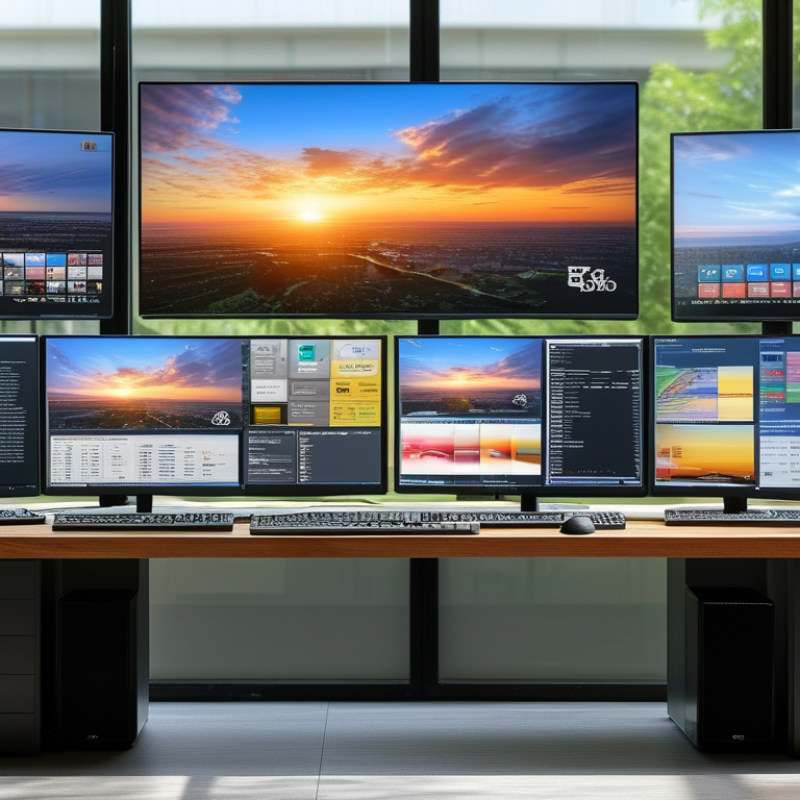
Direct screen displays, often called direct-view LED displays, create images without a projection lamp or LCD backlight. Each pixel contains self-emitting red, green, and blue LEDs. A control system receives video data, divides it into cabinet signals, and refreshes thousands of pixels every second. This structure supports bright images in airports, retail spaces, studios, and outdoor advertising.
Pixel pitch controls viewing distance. A 1.5-millimeter pitch suits close indoor viewing, while larger pitches can work across wider outdoor areas. Brightness, refresh rate, contrast, and weather protection also affect purchasing decisions. Grand View Research valued the global LED display market at approximately USD 7.6 billion in 2023. MarketsandMarkets projects continued growth through 2028, driven by large-format commercial and event installations. These figures show demand, not guaranteed project success. Installation conditions still matter more than a market chart.
Tips: Ask suppliers for measured brightness, refresh-rate data, cabinet tolerance, and independent test documents. Request a live demonstration using your own video files. Check viewing distance, power consumption, spare-module access, and local technical support. A higher brightness rating is not always better; it may increase energy use and cause eye strain indoors. I have found that buyers often focus on pixel pitch while overlooking heat management. That mistake can reduce image stability and shorten component life. Also, supplier claims should be compared with IEC testing records and an agreed acceptance checklist.

Top Direct Screen Display Suppliers for Global Buyers
Key Factors for Evaluating Global Display Suppliers
Choosing a direct screen display supplier requires more than comparing catalog prices. A polished website proves little. Request a working sample with the exact brightness, resolution, viewing angle, and operating conditions required for your project. Inspect color consistency across the panel, not only the center image. Small differences become obvious in a retail wall or control room.
Production experience should be visible in testing records, inspection procedures, and installation guidance. Ask how suppliers manage dead pixels, uneven backlighting, heat buildup, and transport damage. Reliable suppliers provide clear tolerances and realistic lead times. They also explain replacement policies without hiding behind vague warranty language. Check factory capacity, technician training, and previous projects with similar screen sizes. Direct communication matters when a shipment arrives with one damaged cabinet.
Compliance deserves careful attention. Confirm applicable electrical, electromagnetic, recycling, and workplace safety requirements in the destination market. Request current test reports and verify that they match the delivered model. Pricing should include packaging, spare parts, software, shipping terms, and after-sales labor. A cheaper quotation may become expensive after installation. I have learned that supplier claims need independent checking. Even strong documentation can contain gaps. Leave room for a pilot order, because real performance often challenges the original specification.
Buyer evaluation weighting based on practical requirements for international display sourcing.
Quality consistency and delivery reliability receive the highest weighting because they directly affect product performance, production continuity, and international fulfillment. Certification compliance, technical support, customization capability, and total cost are also important when comparing direct screen display suppliers.
Direct screen display suppliers usually serve several distinct buyer categories. Indoor fine-pitch suppliers focus on control rooms, retail walls, studios, and corporate reception areas. Their products need close-view clarity, quiet cooling, and stable color calibration. Outdoor fixed-installation suppliers prioritize brightness, weather resistance, ventilation, and cabinet protection. For a roadside display, readable content matters more than extreme resolution.
Rental and staging suppliers build lightweight cabinets for concerts, exhibitions, conferences, and temporary venues. Fast assembly, corner protection, spare modules, and tool-free access can reduce on-site delays. Transparent screen suppliers target glass façades, showrooms, and architectural spaces. They must balance visual transmission with brightness, structure, and installation limits. This category often looks impressive in photos, but real performance depends heavily on ambient light.
Global buyers should compare suppliers by category rather than price alone. Ask for measured brightness, refresh rate, viewing distance, power consumption, ingress protection, and operating temperature. Request sample footage and a physical module when possible. Supplier experience becomes visible in wiring labels, packing quality, calibration records, and replacement procedures. A detailed warranty should define response times and spare-part availability. I have seen buyers overlook heat management because a demonstration room felt comfortable. Outdoor cabinets later performed differently. That mistake is easy to repeat. Specifications can also vary between samples and mass production, so independent inspection deserves a place in the purchasing plan.
| Supplier Category | Core Display Technology | Typical Screen Sizes | Typical Brightness | Common Resolution Range | Touch and Viewing Options | Typical Interfaces | Operating Environment | Common Buyer Applications |
|---|---|---|---|---|---|---|---|---|
| Direct-View LED Display Suppliers | Self-emissive LED modules using surface-mount or discrete LED packages | From approximately 1 m² video walls to large-format outdoor installations | Indoor: about 600–1,500 nits; outdoor: about 4,000–10,000+ nits | Pixel pitches commonly range from about 0.9 mm to 10 mm or more | Wide viewing angles; touch is available through an added interactive layer | HDMI, DisplayPort, DVI, Ethernet, sending cards, control processors | Indoor models; weather-protected outdoor models with sealed cabinets and higher ingress protection | Advertising screens, control rooms, stadiums, transportation hubs, retail walls and event displays |
| Commercial LCD Display Suppliers | LED-backlit liquid-crystal display panels | Approximately 32–98 inches for individual commercial screens; larger walls use tiled panels | About 350–2,500 nits, depending on indoor, window-facing or outdoor use | Full HD to 4K UHD are common; higher resolutions are available for specialized uses | Standard, wide-viewing-angle and high-contrast panels; optional projected-capacitive touch | HDMI, DisplayPort, USB, RS-232, Ethernet and wireless network options | Primarily indoor; specialized models support semi-outdoor or high-temperature conditions | Digital signage, menu boards, meeting rooms, retail displays, reception areas and public information systems |
| Industrial TFT-LCD Suppliers | Thin-film-transistor LCD with LED backlight | Approximately 3.5–32 inches, with custom sizes available for equipment integration | About 300–1,500 nits; sunlight-readable versions can exceed this range | Typically WVGA, WXGA, HD, Full HD and selected higher-resolution formats | Resistive, projected-capacitive or no-touch configurations; wide temperature options available | LVDS, eDP, MIPI DSI, RGB, HDMI and embedded controller interfaces | Industrial, medical, transportation and outdoor enclosures; extended-temperature models are available | Factory equipment, vehicle terminals, medical instruments, measurement devices and operator panels |
| OLED Display Suppliers | Organic light-emitting diode panels with self-emissive pixels | Small embedded panels from about 1–10 inches; larger commercial panels are also available | Commonly about 300–1,000 nits, depending on panel type and operating mode | From low-resolution embedded formats to Full HD and 4K UHD in larger panels | High contrast, deep blacks and broad viewing angles; flexible and touch-integrated formats may be offered | MIPI, SPI, RGB, LVDS, eDP and HDMI through suitable controller hardware | Indoor and controlled environments; temperature, lifetime and image-retention requirements must be evaluated | Premium equipment interfaces, automotive displays, wearable devices, instrumentation and high-contrast signage |
| E-Paper Display Suppliers | Reflective electrophoretic electronic-paper technology | Approximately 2–42 inches for standard modules; larger tiled solutions are possible | Reflective rather than backlight-rated; readability depends on ambient illumination | Commonly monochrome, tri-color or multi-color formats from low resolution to approximately 300 ppi | Paper-like readability, wide viewing angle and optional front lighting; touch is available on selected modules | SPI, I²C, USB and custom embedded controllers | Low-power indoor and sheltered environments; refresh speed and temperature behavior require application review | Electronic shelf labels, logistics labels, room signs, price tags, schedules and low-power information boards |
| Interactive Touch Display Suppliers | LCD or LED display combined with projected-capacitive or infrared touch technology | Approximately 10–110 inches, including tabletop, wall-mounted and large interactive formats | About 300–1,000 nits for indoor models; higher-brightness versions are available | Full HD and 4K UHD are common in medium and large formats | Multi-touch support is common; infrared systems support larger screen sizes and gloved interaction | HDMI, USB, DisplayPort, Ethernet, RS-232 and wireless casting interfaces | Indoor education, office, retail and public-service environments; rugged versions support heavier use | Classrooms, conference rooms, self-service kiosks, wayfinding, collaborative workspaces and retail demonstrations |
| Outdoor Digital Signage Suppliers | High-brightness LCD or direct-view LED with protective enclosure design | Approximately 32–86 inches for LCD units; LED installations can be considerably larger | Usually about 2,500–10,000+ nits, selected according to sunlight exposure | Full HD and 4K UHD for LCD; LED resolution depends on pixel pitch and viewing distance | Anti-glare glass, optical bonding and optional touch; thermal management is essential | HDMI, DisplayPort, USB, Ethernet, media players and remote management systems | Outdoor-rated cabinets, high-temperature operation, moisture protection and vandal-resistant options | Transit information, roadside advertising, shopping centers, outdoor kiosks and public communication |
| Transparent Display Suppliers | Transparent LED, transparent OLED or transparent LCD-based display systems | Custom panels and modular installations; common modules are designed for shopfront or architectural integration | Varies by technology; transparent LED generally provides higher outdoor visibility than transparent OLED | Resolution depends on transparency ratio, pixel pitch and panel construction | See-through viewing; touch and interactive functions require additional sensors or a compatible panel design | HDMI, DVI, Ethernet, USB and specialized control systems | Indoor retail and architectural environments; outdoor use requires suitable weather protection | Storefront windows, museums, exhibitions, stage design, brand spaces and architectural media façades |
| Rugged and Vehicle Display Suppliers | Industrial LCD, high-brightness LCD or sunlight-readable display assemblies | Approximately 5–32 inches for embedded units; larger rugged monitors are available | About 700–2,500 nits, with optical bonding and anti-reflective treatments available | Typically WVGA, WXGA, HD and Full HD; resolution is selected according to system requirements | Resistive or projected-capacitive touch; glove, vibration and shock-resistant configurations may be offered | LVDS, eDP, HDMI, USB, CAN, RS-232, Ethernet and vehicle-specific interfaces | Vibration, shock, dust, moisture and extended-temperature options; certification depends on the end use | Fleet terminals, agricultural machinery, construction equipment, marine systems, defense and industrial vehicles |
Note: Specifications are representative industry ranges for supplier-category comparison. Actual performance, customization, certifications, minimum order quantities and lead times should be confirmed for each project.
Top Direct Screen Display Suppliers for Global Buyers
How to Compare Product Quality, Technology, and Customization
When comparing direct screen display suppliers, start with measurable quality, not polished brochures. Request production samples and inspect cabinet seams, pixel consistency, brightness uniformity, and color calibration. Ask for test reports covering thermal performance, power stability, ingress protection, and operating temperature. A reliable supplier should explain its quality process clearly. I prefer documented inspection records over confident promises.
Technology must match the installation. Check pixel pitch, refresh rate, viewing distance, grayscale performance, and control-system compatibility. For outdoor projects, examine weather resistance and heat management. For studios or broadcast spaces, low scan noise and accurate color matter more than extreme brightness. Firmware support also deserves attention. A technically impressive screen can still become difficult to maintain.
Tips: Compare identical specifications across suppliers. Ask for a live demonstration, not only edited videos. Confirm spare-part availability, warranty coverage, response times, and installation training. Discuss customization in practical terms, including cabinet size, mounting method, front or rear service access, and logo-free packaging. Require a written approval sample before mass production.
Customization often reveals a supplier’s real capability. Engineers should confirm structural limits, module compatibility, and delivery effects before accepting unusual designs. No supplier is flawless. I once treated fast replies as proof of competence; that was a weak assumption. Factory audits, reference projects, and independent inspections provide stronger evidence. Evaluate the people behind the display, not only the display itself.
Reliable direct screen display suppliers support more than product selection. They guide buyers through ordering, compliance, logistics, and after-sales service. A strong supplier confirms screen size, pixel pitch, brightness, power requirements, and installation conditions before issuing a quotation. Ask for a detailed specification sheet and a sample test report. Clear payment milestones can reduce misunderstandings. I have found that vague delivery promises often create avoidable pressure later.
Compliance should be checked before production begins. Request relevant safety, electromagnetic compatibility, and environmental documents for the destination market. Packaging should include moisture protection, shock indicators, spare modules, and clear labels. Freight planning also matters. Confirm the shipping term, insurance responsibility, customs documents, and expected port handling time. A delay of several days can affect an entire installation schedule. Forecasts are useful, but they are never perfect.
Tips: Keep one approved sample for comparison. Record every technical change in writing. Request photos of packing before shipment. Test brightness and color consistency when the goods arrive. Do not assume remote support will solve every issue; local technicians may still be needed. After-sales terms should define response times, replacement procedures, troubleshooting limits, and warranty exclusions. Some buyers focus heavily on the initial price. That can be a costly habit.