Leave Your Message

Why Are Cooling Systems Important for Businesses?

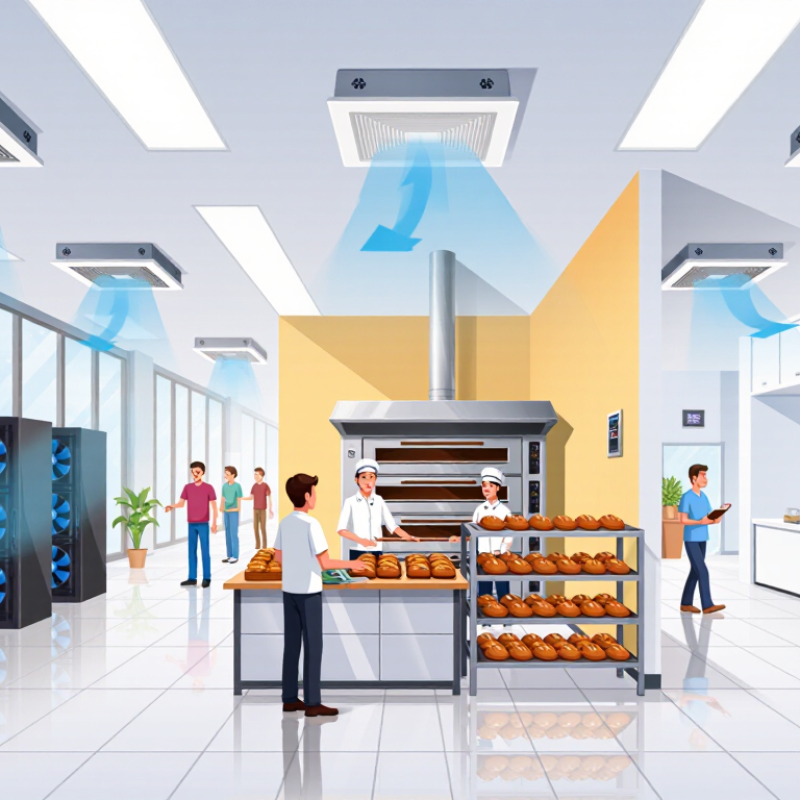
Cooling Systems are easy to overlook when a business runs smoothly. Yet a warm server room, a crowded shop, or a humid production area can quickly disrupt daily work. Reliable cooling helps protect equipment, support product quality, and keep indoor conditions usable for employees and customers. The stakes vary by business. A bakery, data center, and medical clinic do not need identical solutions.

The International Energy Agency’s 2018 report, The Future of Cooling, projects that global energy demand for air conditioning could more than triple by 2050. That forecast makes efficiency and maintenance practical business concerns, not merely technical details. Energy expert Fatih Birol, IEA Executive Director, described cooling demand as “one of the most critical blind spots in today’s energy debate.” His warning points to a real tension: businesses need dependable cooling, while energy use and operating costs matter too.

A well-planned system can reduce temperature swings, avoid preventable interruptions, and make energy use easier to manage. It cannot eliminate every breakdown. That matters. This article explores why Cooling Systems are important for businesses, how they affect comfort and operations, and what owners should consider when choosing and maintaining equipment. The right approach depends on building size, local climate, operating hours, and the work taking place inside. A system that looks adequate on paper may still struggle during a packed afternoon or a heat wave. Planning for those ordinary pressures—and reviewing performance over time—can make cooling more reliable.
Why Are Cooling Systems Important for Businesses?

Business Cooling Systems: Core Functions and Main Equipment

A business cooling system does more than lower room temperature. It removes heat from people, equipment, lighting, and processes, then moves that heat outside. In a busy kitchen, for example, cooking appliances can make one corner much hotter than the rest of the building. Consistent cooling helps protect product quality and gives staff a more workable environment. Small details matter.

The main equipment usually includes chillers or packaged cooling units, pumps, fans, coils, and controls. Chillers cool water that circulates through pipes to air-handling units; packaged systems move heat through a refrigeration cycle and distribute cooled air directly. Filters catch dust, while coils transfer heat between air and refrigerant or water. Thermostats and building controls adjust operation as demand changes. The exact layout depends on the building and its heat load.

Maintenance keeps these parts working together. A technician may check filters, inspect belts, clean coils, and compare supply and return temperatures. A clogged filter can restrict airflow, while a leaking pipe may reduce cooling far from the leak. Energy use also deserves attention: oversized equipment can cycle too often, yet undersized equipment may struggle on a hot afternoon. It is tempting to focus only on the cooling unit itself, but ducts, insulation, and control settings can undermine performance. I would not assume that a colder setting fixes every comfort complaint.

How Commercial Cooling Works: Heat Transfer, Refrigerants, and Controls

In a commercial cooling system, heat is moved rather than simply “removed.” Warm air or water passes across an evaporator coil, where refrigerant absorbs heat and changes from liquid to vapor. Heat moves outward. A compressor then raises the refrigerant’s pressure and temperature. At the condenser, that heat transfers to outdoor air or cooling water, and the refrigerant returns to liquid form. An expansion device reduces its pressure before the cycle repeats. The details vary: a grocery store’s refrigerated cases face different loads from an office building’s air-conditioning system.

Controls help match cooling output to changing conditions. Temperature sensors report what is happening in rooms, ducts, or water loops. A controller can adjust compressor capacity, fan speed, or valves instead of running everything at full power. Better matching can reduce energy use and limit uncomfortable temperature swings. Small details matter. A dirty coil, blocked airflow, or poorly placed sensor can make readings misleading and force equipment to work harder. Refrigerant charge also needs trained attention; too much or too little can impair performance. There is no single ideal setting for every building. Occupancy, humidity, equipment, and outdoor weather all affect the right balance. A control screen may look precise, but it cannot replace checking the actual conditions on site.

Why Are Cooling Systems Important for Businesses? — How Commercial Cooling Works: Heat Transfer, Refrigerants, and Controls

System Dimension What Happens Typical Data or Example Why It Matters to a Business
Heat source People, lighting, equipment, sunlight, and outdoor air add heat to a building. Cooling load is commonly measured in kilowatts (kW) or tons of refrigeration. One ton of refrigeration is approximately 3.52 kW of cooling capacity. Accurate load estimates help size equipment to meet demand without excessive energy use or inadequate cooling.
Heat transfer indoors An evaporator coil absorbs heat from indoor air as air passes across its cold surface. Many chilled-water systems use supply water near 6–7°C and return water near 12–13°C; actual design temperatures vary by system. Effective heat removal supports occupant comfort, equipment operation, and temperature-sensitive processes.
Refrigerant cycle Refrigerant evaporates while absorbing heat, is compressed, releases heat in the condenser, and then expands to repeat the cycle. The cycle has four main components: evaporator, compressor, condenser, and expansion device. Understanding the cycle helps operators identify performance problems such as restricted airflow, fouled coils, or abnormal refrigerant conditions.
Heat rejection The condenser transfers collected heat to outdoor air or to a cooling-water loop. Air-cooled systems reject heat directly to outdoor air; water-cooled systems commonly use a cooling tower to release heat outdoors. Condenser cleanliness and adequate airflow or water flow help maintain capacity and reduce avoidable energy consumption.
Refrigerant selection Refrigerants carry heat through the system; their efficiency, safety classification, and environmental impact differ. Global warming potential (GWP) is reported relative to carbon dioxide, assigned a value of 1. Refrigerant rules and acceptable options depend on equipment and local regulations. Selection affects operating requirements, safety procedures, maintenance planning, and compliance with applicable environmental rules.
Controls and sensors Thermostats, temperature sensors, and building controls adjust equipment operation in response to conditions and schedules. Common control inputs include zone temperature, supply-air temperature, occupancy schedules, and chilled-water temperature. Well-configured controls can limit unnecessary operation while maintaining required indoor conditions.
Part-load operation Cooling demand changes with weather, occupancy, and equipment use, so systems often operate below their maximum capacity. Variable-speed compressors, fans, or pumps can adjust output to match changing demand where the system is designed to support them. Matching output to demand can improve comfort and reduce energy use compared with repeatedly running equipment at full output.
Efficiency measurement Efficiency compares useful cooling delivered with energy consumed. Coefficient of performance (COP) is cooling output divided by energy input; for example, a COP of 4 means 4 units of cooling per unit of input energy under the stated test conditions. Consistent performance metrics help compare equipment and track changes over time; real performance depends on operating conditions.
Maintenance indicators Inspections can reveal issues that restrict heat transfer or disrupt control, such as dirty filters, fouled coils, or incorrect sensor readings. Useful records include temperature readings, operating hours, alarms, filter changes, and maintenance dates. Routine monitoring can help identify problems early, protect equipment, and reduce the risk of unplanned downtime.

Values shown are general examples, not universal design requirements. Actual temperatures, capacity, efficiency, refrigerant choices, and operating procedures depend on the equipment, building, climate, and applicable regulations.

Why Cooling Matters: Worker Comfort, Product Quality, and Operational Uptime

Cooling is not just a comfort setting; it shapes how people work through a long shift. The World Green Building Council’s 2016 review linked improved ventilation with potential productivity gains of 8–11%. That figure does not isolate cooling, and comfort depends on humidity, air movement, clothing, and the task. Still, a stuffy room or a hot production floor can make concentration harder. Small details matter. A stable work area helps, but a thermostat reading alone cannot tell the full story.

For businesses handling perishable food, temperature control also protects product quality. The U.S. FDA Food Code 2022 specifies cold holding at 41°F (5°C) or below for time/temperature control for safety foods. A warm display case, a door left open during restocking, or a poorly placed sensor can undermine that control. Cooling needs monitoring, not just installation. The rule is clear; real rooms are less tidy.

Cooling also supports operational uptime in server rooms, workshops, and production areas. Uptime Institute’s 2024 outage analysis reported that 54% of surveyed operators said their most recent significant outage cost more than $100,000. That figure is not specific to cooling failures, but it shows how costly interruptions can become. Maintenance logs, alarm checks, and clear escalation steps help teams spot rising temperatures before equipment trips offline. Yet even good plans can miss a failing fan. That deserves a second look.

Why Cooling Matters: Worker Comfort, Product Quality, and Operational Uptime

Cooling helps businesses maintain suitable conditions for people, temperature-sensitive products, and equipment. The chart shows two published temperature guidelines; they represent different operating needs, not performance scores.

Cold food holding: 5°C (41°F) or below, per the FDA Food Code. Data center inlet air: 18–27°C recommended range for common classes, per ASHRAE guidance. Worker comfort depends on factors such as humidity, air movement, clothing, and activity; there is no single temperature range that applies to every workplace.

Energy Impact: HVAC Uses About 40% of U.S. Commercial-Building Energy (DOE)

Why Are Cooling Systems Important for Businesses?

Cooling systems are more than a comfort feature; they can be a major part of a building’s energy demand. The U.S. Department of Energy estimates that HVAC uses about 40% of energy in U.S. commercial buildings. That is substantial. The actual share varies with climate, building age, operating hours, and occupancy, so the figure is a guide, not a guarantee for every site.

On a hot afternoon, a rooftop unit may run for hours while doors open and customers come and go. Dirty filters, blocked vents, or poorly sealed ducts can make the system work harder than necessary. Small problems matter. Regular filter changes and scheduled inspections can help identify inefficiencies before they become costly repairs. Keeping simple records of energy use and service visits also helps managers spot unusual changes.

Energy savings do not come from turning cooling down without considering people or equipment. Temperatures that feel acceptable in one area may be uncomfortable in another, and sensitive equipment may need stable conditions. A useful plan balances efficiency with real operating needs. It is easy to focus on the 40% figure and overlook how much conditions differ from building to building.

Planning Reliable Cooling: Capacity, Efficiency, Maintenance, and Resilience

Why Are Cooling Systems Important for Businesses?

Reliable cooling is not just about comfort; it protects stock, equipment, staff, and operating hours. A warm server room or humid storage area can turn a routine fault into spoiled goods or downtime. Plan capacity around peak heat, occupancy, equipment, door openings, and local weather—not floor area alone. A system sized for an average day may struggle during a crowded afternoon. Measure temperatures in several locations. Small details matter.

Efficiency deserves equal attention. The U.S. Department of Energy estimates heating and cooling account for about 40% of energy use in commercial buildings. That makes seasonal tune-ups, clean filters, sealed ducts, and calibrated controls financially relevant. The International Energy Agency’s 2018 report, The Future of Cooling, projects that global energy demand for space cooling could more than triple by 2050 under current trends. Efficient equipment can reduce waste, but only when matched to actual loads. Maintenance is not glamorous. Log temperatures, alarms, repairs, and energy use to spot recurring problems.

Resilience means planning for heat waves and outages. Identify critical rooms, set safe temperature limits, and decide which areas need backup power or temporary cooling. Test alarms after hours; a notification nobody receives is no protection. Review service response times and keep common replacement parts available. Forecasts are imperfect: weather shifts, occupancy changes, and estimates miss. Revisit the plan after renovations or repeated temperature excursions.