China’s power supply sector spans compact adapters, industrial AC/DC units, telecom systems, and high-density server supplies. The leading Power Supply Manufacturers are not defined by factory size alone. Buyers also weigh efficiency, thermal performance, protection features, certifications, delivery capacity, and after-sales support. A clean specification sheet helps. It does not tell the whole story.
Power-conversion engineer Bob Mammano has emphasized a useful principle: “A power supply must be judged as part of the system it serves.” That perspective matters when comparing Chinese suppliers. A unit that performs well on a bench may behave differently inside a warm cabinet, beside noisy equipment, or under changing loads. Details count: connector fit, airflow, ripple measurements, and clear test reports. So does the supplier’s willingness to explain limits. That deserves scrutiny.
This overview examines manufacturers across consumer, industrial, and specialized applications. It considers product range, engineering capability, quality controls, customization, and global service support. Company rankings can be imperfect; product fit depends on the application and evidence available. A familiar brand is not automatically the right choice. Readers should verify current specifications and request samples or test data before making purchasing decisions. The aim is practical comparison, not a universal winner.
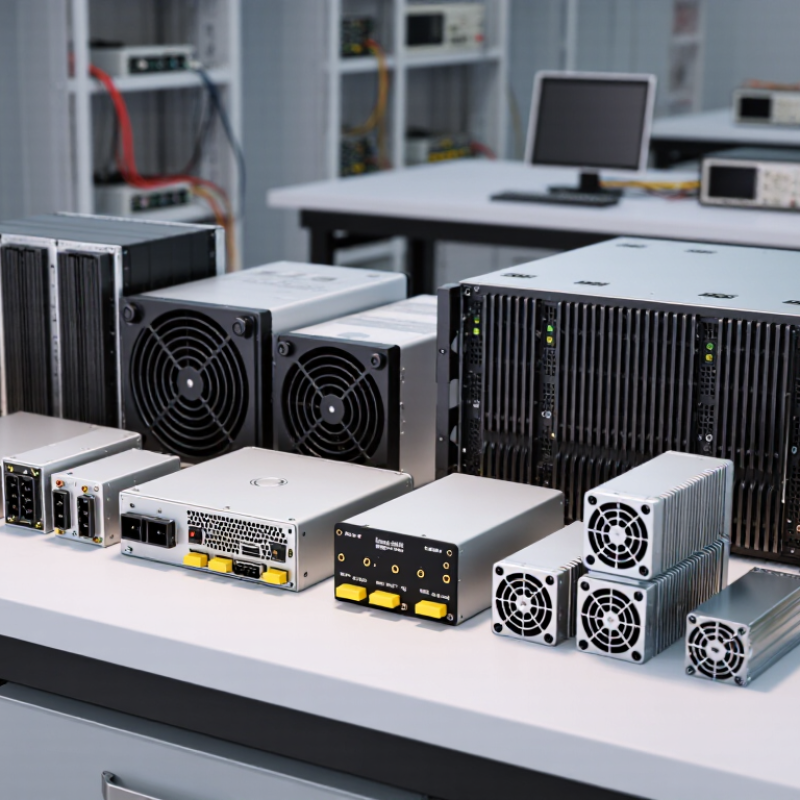
China’s power-supply manufacturing industry covers equipment that converts and controls electricity for factories, buildings, and electronic products. Typical units include AC-DC converters, industrial power supplies, and compact chargers. Inside a production line, engineers test heat, voltage stability, and performance under changing loads. Small differences matter. A loose connector or uneven cooling can shorten a unit’s service life.
The Ministry of Industry and Information Technology reported 15.1 trillion yuan in operating revenue for China’s electronic-information manufacturing sector in 2023. This broad category includes power-supply businesses, but it is not a power-supply-only figure. Treating it as one would overstate what the data shows. The IEA’s Electricity 2024 analysis expects China to account for about 60% of global electricity-demand growth through 2026. That outlook points to wider demand for electrical equipment, though it does not guarantee growth for every manufacturer. Capacity, component sourcing, and dependable quality still shape performance.
Tips: When comparing manufacturers, ask for rated-load test results, temperature-rise records, and warranty terms. Check how the supplier handles failure analysis, not just its factory size. A polished sample is useful, but repeatable production matters more.
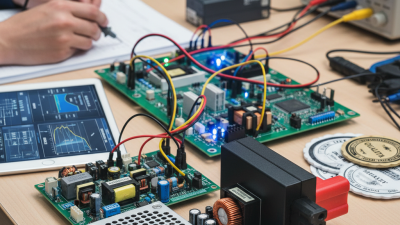
Identifying a leading power supply manufacturer takes more than comparing prices or browsing a polished catalogue. Look for clear technical data: rated output, efficiency across different loads, operating temperature, and protection against overcurrent or overheating. Ask how performance is tested, and request reports that match the exact model you plan to buy. Details matter.
Factory evidence is useful, but it should be specific. A credible supplier can explain incoming component checks, production controls, and final testing without hiding behind broad claims. Ask whether each unit receives a load test, and how failures are recorded and corrected. If possible, inspect a sample under realistic conditions: measure output stability, listen for unusual noise, and check temperatures after sustained operation. Paperwork can look tidy. It is not the whole story.
Also assess engineering support and supply consistency. Ask how design changes are communicated, whether components can be traced by production batch, and what technical help is available after delivery. Independent certifications can support confidence, but verify their scope and model coverage rather than relying on a logo alone. A site visit or third-party audit may reveal gaps that a brochure misses. Even these checks are imperfect; no single test proves long-term reliability. Compare evidence across several suppliers, and note where answers remain vague.
China’s power-supply manufacturers serve several distinct markets, and their product specialties often reflect different operating demands. Industrial suppliers commonly build AC-DC converters and switching power supplies for factory automation, where stable output matters amid heat, dust, and changing loads. Telecom and server-focused producers concentrate on compact, efficient modules that fit tightly packed equipment racks. Some companies also make uninterruptible power systems and power-conversion units for data centers.
The demand is substantial. The International Energy Agency’s Electricity 2024 report estimates that data centers used about 460 terawatt-hours of electricity worldwide in 2022. It projects consumption could reach 620 to 1,050 terawatt-hours by 2026. These figures describe electricity use, not power-supply sales, but they help explain the focus on efficiency, thermal management, and reliable operation. Small losses matter at scale.
Specialization is not always neat. A supplier may offer both industrial converters and server power modules, yet differ in testing depth, customization, or production volume. Buyers should compare efficiency curves at realistic loads, protection features, operating-temperature ranges, and service support—not just rated wattage. A polished specification sheet can still leave questions. Independent test records and clear warranty terms provide useful evidence, though they do not replace application-specific evaluation.
China’s power-supply manufacturers are better compared by technical fit than by production volume alone. IRENA’s Renewable Capacity Statistics 2024 records 297.6 GW of new renewable capacity in China in 2023. Solar contributed 216.9 GW. This rapid deployment raises demand for efficient conversion, stable output, and thermal control. Field conditions are unforgiving. Dust, heat, and voltage swings expose weak designs.
Technology separates suppliers: silicon-based designs remain common, while some firms adopt silicon-carbide or gallium-nitride switches for higher-frequency conversion. The IEA’s Global EV Outlook 2024 says China sold about 8.1 million electric cars in 2023, nearly 60% of worldwide sales. That scale supports demand for onboard chargers and DC–DC converters. Yet compact designs can run hot; efficiency figures alone do not prove long service life.
Industrial automation and telecom equipment demand different trade-offs: factories value overload tolerance and repair access, while data centers emphasize efficiency, redundancy, and predictable output. Export-oriented suppliers also need traceable testing and application-specific safety certifications. Compare operating temperature, ripple, hold-up time, and warranty failure data, not brochure wattage. Some public specifications remain incomplete, so buyer-side validation still matters.
China’s power supply industry draws strength from dense component networks, experienced production teams, and flexible factories. These advantages can shorten development cycles and support products ranging from compact adapters to industrial power units. Scale matters, but it is not the whole story. Reliable output also depends on careful design, stable sourcing, and repeatable quality checks.
Tips: Ask for efficiency and thermal test data, not just a headline rating. Check how the supplier documents component changes and handles sample testing. Small details matter. A warm enclosure or inconsistent test report deserves a closer look.
Global reach is shaped by more than competitive pricing. Exporters must adapt designs to different operating conditions, customer specifications, and recognized safety and performance requirements. Clear technical documents and responsive engineering support can make cooperation smoother across time zones. Buyers should compare real test records, warranty terms, and production consistency, rather than relying on a factory’s size alone. I would still leave room for uncertainty: a strong sample does not guarantee every production batch will match it. That is why ongoing inspection and communication remain useful, even with an established supplier.
A qualitative overview of the manufacturing, regulatory, and market factors influencing China's power supply industry. Requirements vary by product type and destination market.
| Industry Dimension | Verifiable Context | Effect on Manufacturers | Relevance to Global Reach | Reference Point |
|---|---|---|---|---|
| Manufacturing clusters | The Pearl River Delta and Yangtze River Delta are major Chinese electronics and electrical-equipment manufacturing regions. | Nearby suppliers, engineering services, and production facilities can support sourcing and product development. | Established manufacturing networks can support export production and customer-specific product configurations. | Regional industrial profiles and China's manufacturing statistics. |
| Component and supplier ecosystem | Power supply production draws on components such as printed circuit boards, transformers, capacitors, semiconductors, and connectors. | Supplier availability can influence lead times, design choices, quality control, and production planning. | A broad sourcing base can help manufacturers serve varied specifications, while component sourcing still requires risk management. | Typical bill of materials for AC-DC and DC-DC power conversion products. |
| Product safety standards | China's GB 4943.1-2022 covers safety requirements for audio/video, information, and communication technology equipment and took effect on August 1, 2023. | Design, testing, documentation, and certification planning must account for the applicable product category and standard. | Products intended for export may also need to meet destination-market requirements; one approval does not automatically cover every market. | GB 4943.1-2022; IEC 62368-1. |
| Energy-efficiency regulation | The European Union's Regulation (EU) 2019/1782 sets ecodesign requirements for external power supplies within its scope. | Efficiency and no-load power consumption can affect circuit design, component selection, and product testing. | Exporters need to check the applicable efficiency rules for each product type and destination rather than assume a single global threshold. | Commission Regulation (EU) 2019/1782. |
| End-market diversity | Power supplies are used across information technology, telecommunications, industrial equipment, consumer electronics, and energy-related systems. | Different applications require different output ratings, form factors, operating conditions, and safety provisions. | Serving multiple application sectors can broaden addressable markets, but increases the need for application-specific engineering. | Common application categories for power conversion equipment. |
| Efficiency and power density | Power supply design commonly balances conversion efficiency, heat dissipation, size, reliability, and cost. Wide-bandgap semiconductors such as GaN are used in some power-conversion designs. | Design teams must evaluate switching devices, magnetic components, thermal management, and control methods as an integrated system. | Compact, efficient designs can suit space-constrained applications, subject to reliability, safety, and market requirements. | Power electronics design principles and semiconductor application literature. |
| Customization and production models | Power supply projects often specify electrical ratings, connectors, enclosure dimensions, cooling, and operating conditions for a particular application. | Manufacturers may need adaptable engineering, testing, and production processes to support both standard and customized designs. | Flexible production can help address overseas customer specifications, provided that compliance and documentation are managed for each market. | Common requirements in OEM and contract-manufacturing projects. |
| Export readiness | International sales involve market-specific safety and electromagnetic compatibility requirements, technical documentation, labeling, and after-sales arrangements. | Compliance planning and product documentation need to be considered alongside manufacturing and shipment schedules. | Reliable access to overseas markets depends on matching the product and its documentation to local rules and customer requirements. | Applicable national regulations and conformity-assessment requirements. |