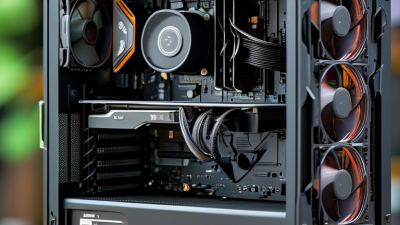
Choosing suppliers of PC Cases in China involves more than comparing product photos and unit prices. Global buyers need chassis that protect components, support reliable cooling, and arrive with consistent finishes. A case may look impressive online yet disappoint with sharp edges, weak panels, or poorly aligned mounting holes. Details matter. For distributors, system integrators, and private-label brands, these flaws can create assembly delays, returns, and additional support costs.
A useful supplier comparison examines manufacturing capability, quality control, customization options, and export documentation alongside pricing. Buyers should confirm motherboard compatibility, GPU clearance, radiator mounting positions, and space behind the motherboard tray. For example, a listed 360 mm radiator mount does not automatically guarantee clearance for thick radiators and tall memory modules. Request dimensioned drawings. Samples should also reveal paint consistency, screw alignment, front-panel connector quality, and how easily dust filters can be removed. Packaging deserves attention because tempered-glass panels and projecting feet can suffer damage during international transport. Written inspection criteria make expectations clearer before production begins.
This guide approaches leading Chinese suppliers through practical sourcing criteria rather than treating every manufacturer as equally suitable. Some buyers prioritize low minimum order quantities; others need tooling support, predictable capacity, or established quality procedures. The cheapest quotation may still be appropriate, but its value depends on specifications, packaging, and the agreed inspection process. Even a promising sample leaves questions about consistency across a full production run. A shortlist is therefore a starting point, with supplier selection depending on verified evidence and each buyer’s requirements.

China’s PC case manufacturing industry combines metal fabrication, plastic molding, surface finishing, and assembly within established electronics production clusters. Suppliers around Shenzhen and Dongguan can coordinate enclosure production with nearby component vendors. This proximity helps buyers develop custom front panels, ventilation patterns, and cable-routing layouts. However, factory capabilities differ considerably. A polished showroom sample provides limited evidence of consistent production quality.
International Data Corporation’s January 2025 market report estimated worldwide PC shipments at 262.7 million units in 2024. That represented 1% annual growth.
These figures provide demand context, although they do not measure standalone case sales or Chinese chassis exports. Desktop systems represent only part of the total. Treating overall PC shipments as the addressable case market would therefore overstate demand. Segment definitions matter.
For global buyers, meaningful supplier comparisons start with measurable specifications: steel thickness, panel alignment, coating adhesion, and packaging strength. Request material specifications and inspect production samples with the intended motherboard, graphics card, and cooling hardware installed.
Samples can disappoint. A nominally compatible enclosure may leave insufficient clearance for power connectors or radiator fittings. Ask factories to document inspection methods and explain how they control changes between sampling and mass production. Lower quotations deserve scrutiny when material thickness, accessory counts, or carton specifications remain vague. Even detailed specifications need revision when assembly trials expose awkward screw access or sharp internal edges.
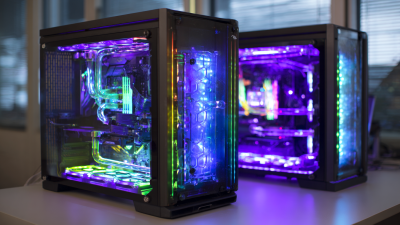
China’s leading PC case suppliers serve different needs, from budget office builds to custom gaming systems. The Worldwide Quarterly Personal Computing Device Tracker’s 2024 results reported 262.7 million traditional PC shipments, up 1.0% annually. That measures PCs, not cases. Still, it provides useful context for component sourcing. Global buyers should compare suppliers by production capability, engineering support, and verified quality records.
Suppliers around Shenzhen and Dongguan often advertise gaming enclosures, tempered-glass panels, and customizable lighting. Buyers should verify those specialties through samples and factory documentation. Sheet-metal specialists suit projects requiring precise mounting holes, consistent bends, and repeatable chassis dimensions. Aluminum-focused manufacturers may suit compact premium builds, although machining and surface finishing can increase costs. OEM suppliers can adapt front panels, tooling, packaging, and internal layouts. ODM suppliers offer existing designs that may reduce development work. Neither model guarantees better quality. A polished sample can still hide inconsistent production, so batch inspection matters.
Tips:Request a specification sheet covering steel thickness, motherboard formats, GPU clearance, and radiator mounting positions. Check the details. For a planned 360 mm graphics card, verify clearance with front fans installed. Ask how coating thickness and dimensional tolerances are measured. Evaluate airflow using the same components, fan speeds, and room temperature across samples. Mesh panels can improve ventilation, but dust buildup deserves attention. Request packaging-test results tied to the proposed shipping carton.
Chinese PC case suppliers typically offer full-tower, mid-tower, and compact designs for different motherboard formats. Mid-towers commonly accommodate ATX boards, while smaller enclosures often target Micro-ATX or Mini-ITX builds. Check actual clearances. A case advertised for a 360 mm radiator may leave insufficient space for thick fans or tall memory modules. Request dimensioned drawings showing GPU clearance, radiator positions, cable space, and drive mounting points before approving a sample.
Material choices influence weight, rigidity, appearance, and shipping costs. Steel panels provide stiffness at competitive costs, although thin sheets can flex around large ventilation cutouts. Aluminum reduces enclosure weight, but panel thickness and reinforcement still matter. The USGS Mineral Commodity Summaries 2025 estimates China produced 43 million tonnes of primary aluminum in 2024. Estimated global production reached 72 million tonnes, placing China at roughly 60% of the total. This indicates substantial upstream capacity; it does not establish any individual supplier’s machining quality or material traceability. Ask for material specifications.
Customization can include mesh patterns, powder-coated colors, front-panel ports, removable filters, and tool-free side panels. For global buyers, packaging deserves the same attention as exterior styling. Specify foam protection, accessory placement, and carton drop-testing requirements, especially for tempered-glass configurations. Test assembled samples. A visually clean front panel can restrict airflow, and an attractive prototype may hide inconvenient cable routing. These compromises are easy to underestimate. Agree on inspection criteria for panel gaps, coating consistency, sharp edges, and connector alignment before production begins.
Choosing a PC case supplier in China requires more than comparing prices and polished product photos. Request samples from the production line, then inspect panel alignment, coating consistency, sharp edges, and motherboard standoff positions. Check the basics. A 0.7 mm steel specification should identify the measurement method and whether coating thickness is included in the stated figure. Test USB ports, power buttons, and cable clearance with an assembled system. An attractive sample still leaves an uncomfortable question: will regular production match it?
Ask for monthly output records, current production commitments, and lead times for your exact configuration. Capacity figures need context, because metal stamping, painting, and final assembly may operate at different speeds or depend on outside subcontractors. Verify the bottleneck. For a 2,000-unit order, request a production schedule showing material procurement, assembly, inspection, and packing dates. Agree on defect definitions and sampling criteria before paying a deposit.
Compliance checks should match the destination market and the components included with each case. Request applicable material declarations and test reports, checking that model numbers, dates, and tested configurations match the goods being offered. A certificate alone proves little. Included fans, lighting controllers, or power supplies can change the compliance documents required for your shipment. Packaging deserves attention too: specify corner protection, carton strength, and an agreed transport test. Leaving packaging decisions until shipment booking is tempting, but crushed panels can erase a small unit-price saving.
| Evaluation Area | What to Assess | Evidence to Request | Suggested Buyer Benchmark | Weight |
|---|---|---|---|---|
| Product quality | Panel fit, dimensional consistency, finish, sharp-edge control, and assembly repeatability. | Current inspection plan, measurement records, defect history, sample units, and corrective-action reports. | Approve a signed golden sample; define drawing tolerances and an agreed incoming-inspection plan before production. | 25% |
| Manufacturing capacity | Available capacity for the required case types, production constraints, and ability to handle peak demand. | Monthly capacity by model or process, recent production schedules, equipment list, staffing plan, and utilization data. | Confirm capacity against the buyer’s forecast and order schedule; verify figures against recent production records rather than relying on stated maximum output. | 20% |
| Engineering capability | Design-for-manufacturing support, tooling control, revision management, and ability to accommodate buyer specifications. | Engineering workflow, sample-development timeline, drawing-change process, tooling ownership terms, and prototype records. | Require written approval for drawing revisions, materials, colors, and any tooling or process changes before implementation. | 15% |
| Regulatory compliance | Material and substance requirements applicable to the destination market and the product configuration. | Material declarations, supplier declarations, relevant test reports, and a process for monitoring regulatory changes. | Assess RoHS Directive 2011/65/EU as amended and REACH Regulation (EC) No 1907/2006 where applicable. Confirm scope and evidence for the actual product and market. | 15% |
| Management systems | Documented controls for quality, environmental management, traceability, and corrective actions. | Valid ISO 9001 or ISO 14001 certificates, including issuing body, validity dates, site, and scope; audit findings where available. | Check that certificates cover the manufacturing site and relevant activities. Treat management-system certification as supporting evidence, not proof of product compliance. | 5% |
| Supply-chain resilience | Availability and traceability of key materials and components, plus contingency planning for disruptions. | Approved-material list, supplier-monitoring process, traceability records, and documented business-continuity plan. | Confirm material substitutions require prior written approval and that production lots can be traced to relevant material records. | 10% |
| Delivery and export readiness | Schedule reliability, export-document capability, packaging suitability, and shipment coordination. | On-time delivery records, sample shipping documents, packaging specifications, and agreed Incoterms® rules. | Set shipment milestones and packaging requirements in the purchase agreement; assess wooden packaging against ISPM 15 requirements when applicable. | 5% |
| Commercial transparency | Quotation clarity, cost drivers, payment terms, warranty handling, and change-order controls. | Itemized quotation, tooling and sample charges, warranty terms, lead-time assumptions, and written change-control terms. | Compare quotations using the same specifications, order quantities, packaging, and delivery terms; document all assumptions before placing an order. | 5% |
| Total evaluation weight | 100% | |||
Note: The benchmarks above are suggested buyer evaluation criteria, not claims about any specific supplier. Confirm regulatory and certification requirements for the product, destination market, and order scope.
Choosing PC case suppliers in China requires more than comparing unit prices. Request a quotation covering steel thickness, motherboard compatibility, fan mounts, packaging, and spare parts. Ask whether panel thickness excludes paint, since coatings can distort measurements. For a 300-unit order, confirm carton dimensions and gross weight before calculating freight costs. Get a sample. Approve its drawings and finish in writing, then link the purchase order to those specifications. A good sample does not guarantee consistent production.
Arrange an independent inspection before paying the balance, using a sampling plan agreed with the supplier and a defect checklist tied to your specifications. Check panel alignment, sharp edges, front-panel ports, screw threads, and accessory bags. Measure several panels with a calibrated micrometer rather than accepting the specification sheet alone. Test motherboard standoffs against the approved layout. Photograph defects clearly. Tempered-glass panels need particular attention around edges, mounting holes, and protective packaging. Sampling can miss defects; recurring problems may justify broader checks or reinspection.
Compare shipping quotations using the same named delivery location and Incoterms version. Request separate charges for freight, insurance, destination handling, and final delivery. Bulky cartons can make a low factory price less attractive after shipping. Confirm commercial invoice details, packing lists, and product descriptions with your freight forwarder. Have the importer or customs broker verify tariff classification and destination requirements. Require loading photos showing carton condition, pallet arrangement, and container seals where applicable, while recognizing that photos alone cannot establish adequate moisture protection.
A practical quality-control reference for global buyers: how inspection sample sizes increase with order quantity under General Inspection Level II.
For a defined inspection lot of 501–1,200 PC cases, General Inspection Level II maps to code letter J and a nominal sample size of 80 units under a normal single-sampling plan. Buyers can agree on the inspection plan when ordering, arrange random sampling before shipment, and use the results to inform shipment release.
These figures are standard sampling references, not supplier performance statistics or mandatory inspection quantities. Final sampling instructions and acceptance criteria depend on the agreed AQL, defect categories, inspection severity, and applicable table rules. Sampling does not guarantee that every shipped unit is defect-free.
Source: ISO 2859-1:1999, Table I and Table II-A. General Inspection Level II; normal inspection; single sampling. The chart shows nominal sample sizes associated with code letters F, G, H, J, K, and L; follow any arrows in the applicable AQL column when selecting the final plan.