Why Power Supply Manufacturers Are Crucial for Technology?
Power Supply Manufacturers play a critical role in the technology landscape. They ensure that electronic devices have a stable and reliable source of power. Imagine a world without power supplies. Many devices would fail to function, rendering them useless. From smartphones to large data centers, these manufacturers are the backbone of modern technology.
Power Supply Manufacturers are more than just producers of electrical components. They design solutions to meet varying power requirements. This means adapting to different voltages and currents. The challenge lies in innovation and efficiency. While many manufacturers thrive, some fail to meet the growing demands. This inconsistency can lead to issues in device performance.
In reflecting upon their importance, we see a complex relationship between technology and power. As devices evolve, so do the needs of power supply systems. Manufacturers must adapt to remain relevant. A failure to innovate can lead to stagnation. This constant pressure for improvement reflects a significant challenge within the industry.
The Role of Power Supply Manufacturers in Modern Technology
Power supply manufacturers play a vital role in modern technology. They provide the necessary energy that powers devices, from smartphones to data centers. Industry reports show that the global market for power supplies is expected to reach $37 billion by 2026, growing at a CAGR of 5.2%. This growth indicates increasing dependence on efficient power sources.
Efficient power supplies are essential for minimizing energy loss. In many cases, over 20% of energy can be wasted in low-quality power supplies. Such waste not only affects performance but also has environmental implications. As technology advances, the demand for compact and more efficient power solutions rises. Without the innovation from manufacturers, we might not see advancements in things like renewable energy systems.
Still, the industry faces challenges. Some manufacturers struggle to keep up with the rapid pace of technological change. Quality control can be inconsistent, leading to potential failures in critical applications. Moreover, the reliance on non-renewable materials for production raises concerns about sustainability. It highlights a pressing need for manufacturers to rethink their practices, forging a path toward smarter and greener solutions in power supply technology.
Power Supply Manufacturers' Impact on Technology
Key Components of Power Supply Systems and Their Functions
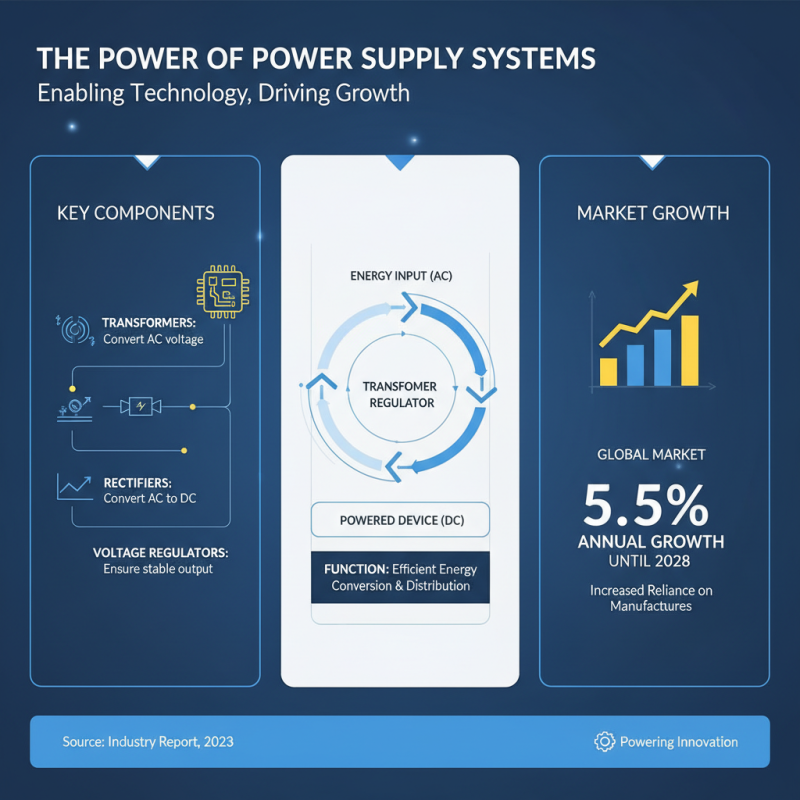
Power supply systems play a vital role in technology. They consist of various key components like transformers, rectifiers, and voltage regulators. Each element performs a specific function, ensuring efficient energy conversion and distribution. According to a recent industry report, the global power supply market is expected to grow by 5.5% annually until 2028. This growth indicates increasing reliance on power supply manufacturers.
Transformers adjust voltage levels, enabling devices to function correctly. Rectifiers convert AC to DC, essential for electronic devices. Voltage regulators maintain a steady output. These components must work seamlessly. However, many manufacturers struggle with quality control. Faulty components can lead to system failures or reduced efficiency. Research shows that up to 20% of power supply failures stem from poor manufacturing practices.
In the quest for innovation, manufacturers often overlook reliability. Designing for efficiency may compromise durability. Balancing performance and lifespan is crucial. The challenge is clear: creating components that meet the demands of modern technology while maintaining high standards. As the power supply landscape evolves, manufacturers must address these concerns. Doing so will be essential for sustaining growth in this critical sector.
Impact of Quality Power Supplies on Device Performance and Longevity
The performance and longevity of electronic devices heavily depend on the quality of their power supplies. According to a recent report by the Power Quality Research Institute, nearly 30% of device failures are attributed to inadequate power supply systems. This statistic emphasizes the importance of selecting reliable power sources for technology applications. A poor-quality power supply can lead to voltage fluctuations, which may cause devices to malfunction or even incur permanent damage.
Many engineers overlook power supply quality. They often focus on flashy features of products but neglect the integral role of power stability. A robust power supply can extend a device's lifespan by an average of 25%. Devices with unstable power sources tend to experience shorter operational lifespans. Simply put, investing in a quality power supply is crucial for long-term performance.
Furthermore, a report from the Energy Efficiency Alliance notes that 20% of total energy consumption in electronics comes from poorly designed power supplies. This inefficiency not only affects device performance but also increases operational costs. As technology continues to evolve, the significance of having high-quality power supplies will only grow. Yet, manufacturers must understand that overlooking this aspect might lead to costly mistakes in the long run.
Trends in Power Supply Manufacturing Technology and Innovations
Power supply manufacturing is evolving rapidly. New technologies drive efficiency and sustainability. These changes are essential for various industries. For instance, renewable energy integration is a growing trend. Power supplies must adapt to fluctuating energy sources, like solar and wind. This requirement pushes manufacturers to innovate.
Smart power supplies are gaining traction. They can communicate with devices for better energy management. Such features reduce waste and enhance performance. However, these advancements come with challenges. Security concerns arise as power supplies become more connected. Manufacturers must address vulnerabilities to protect users.
Another focus is miniaturization. Smaller power supplies meet the demands of compact devices. While this trend offers benefits, it can complicate cooling and durability. Finding the perfect balance is crucial. As technology progresses, manufacturers must continuously rethink their strategies. Innovative designs and materials will pave the future, but not without obstacles.
Challenges Faced by Power Supply Manufacturers in Today's Market
Power supply manufacturers face significant challenges in today’s competitive market. The demand for energy-efficient solutions is rising. However, meeting this demand while maintaining production costs is tough. Manufacturers must innovate constantly. This process often leads to issues in quality control. Small errors can result in major product failures.
Another challenge is the rapid pace of technological advancements. Power supply designs must keep up with evolving electronics. This requires skilled labor and extensive research. Many manufacturers struggle with resource allocation. They often find themselves stretched thin. Prioritizing projects becomes difficult when everything seems urgent.
Regulatory compliance adds another layer of complexity. Different markets have varying standards and certifications. Navigating these requirements can be overwhelming. Manufacturers sometimes overlook these regulations, which leads to penalties. There is also an increasing focus on sustainable practices. Balancing sustainability with performance remains a critical issue. Manufacturers must reflect on their processes. Striving for improvement is key in this challenging landscape.
Why Power Supply Manufacturers Are Crucial for Technology? - Challenges Faced by Power Supply Manufacturers in Today's Market
| Dimension |
Data |
| Market Size (2023) |
$25 billion |
| Annual Growth Rate (CAGR) |
5.2% |
| Key Challenges |
Component shortages, Supply chain disruptions, Increasing costs |
| Top Application Sectors |
Consumer Electronics, Automotive, Industrial Automation |
| Technological Trends |
Eco-friendly designs, Smart power management, Wireless power transfer |