How to Choose the Best Power Supply Manufacturers for Your Needs?
Choosing the right power supply manufacturers can dramatically impact your project's success. This decision is crucial. A reliable power supply is essential for any electronic system. Without quality, performance and safety are at risk.
Many factors influence the selection process. Reputation, certifications, and customer reviews are vital. Manufacturers with years of experience tend to have a better track record. However, newer companies can offer innovative solutions that established ones may not provide.
It’s important to consider specific needs. Do you require high efficiency, compact size, or robust design? Each project has unique demands. Balancing cost with quality is often a challenge, and not every manufacturer will meet your expectations. Take the time to reflect on what matters most to you in power supply manufacturers. Your choices can lead to success or disappointment in your endeavor.
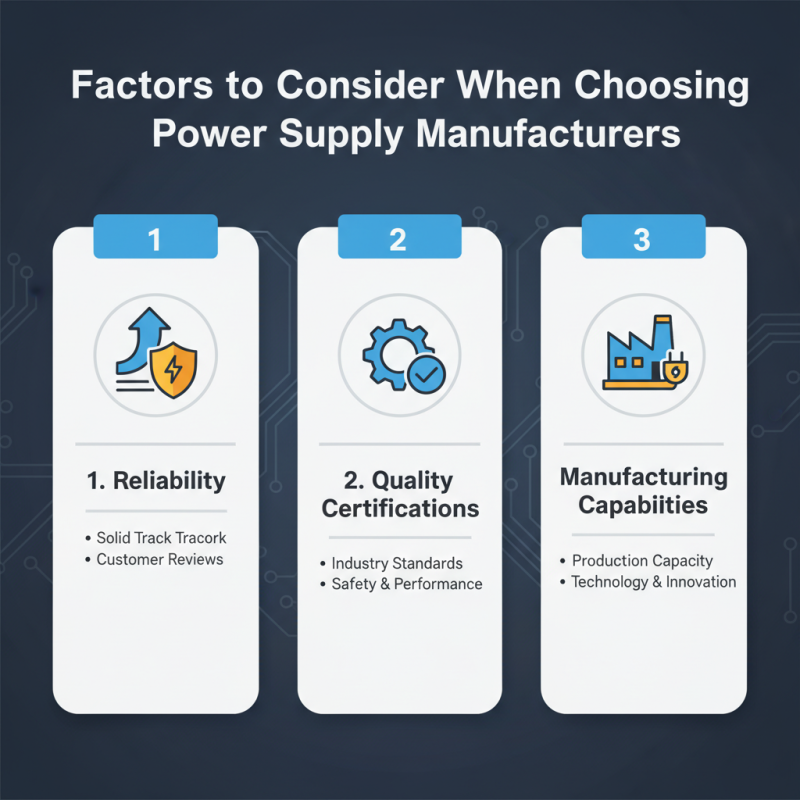
Factors to Consider When Choosing Power Supply Manufacturers
When choosing a power supply manufacturer, several critical factors come into play. Reliability is key. Look for manufacturers with a solid track record of delivering quality products. Checking customer reviews can provide insight into their reliability. Quality certifications are also essential. A manufacturer should adhere to industry standards to ensure safety and performance.
Another factor is technical support. Evaluate the manufacturer's ability to provide assistance during and after the purchase. Accessible support can significantly enhance your experience. If issues arise, timely help can prevent extended downtimes.
Tips: Consider engaging with the manufacturer directly. Ask questions about their products and services. This can reveal their level of expertise and responsiveness. Assess the range of products they offer. A well-rounded manufacturer can meet diverse needs over time.
Also, keep an eye on pricing. While lower prices may be tempting, they often lead to compromises in quality. Weigh the cost against the features and reliability. Balancing these factors will help ensure you choose a manufacturer that meets your specific requirements. Remember, the goal is to find a partner that supports your long-term needs.
Understanding Different Types of Power Supplies and Their Applications
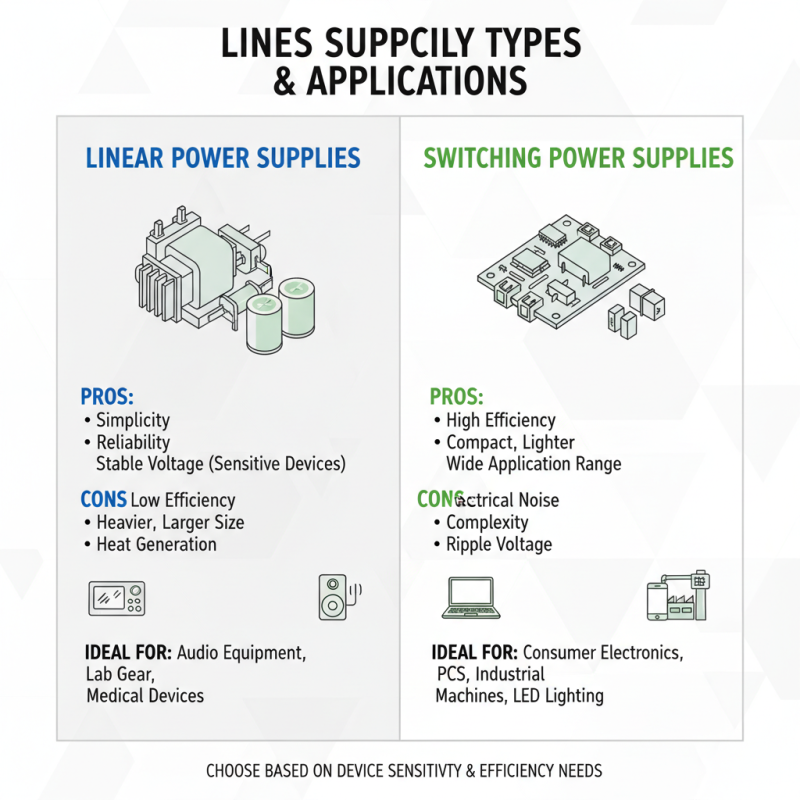
When selecting a power supply, it's essential to understand the various types available and their specific applications. Linear power supplies offer simplicity and reliability. They are ideal for sensitive electronic devices that require stable voltage. However, they can be inefficient, especially under heavy loads. Switching power supplies are more common in modern devices. They are compact and efficient, suitable for a range of applications from consumer electronics to industrial machines. But noise from these supplies can affect sensitive equipment.
Another type, uninterruptible power supplies (UPS), serves a critical role in maintaining power during outages. They protect sensitive hardware from sudden disruptions. However, not all UPS systems are created equal; some models may have limited battery life and capacity. Knowing your specific power requirements is crucial. High wattage may demand a different approach than low power needs. Evaluate what fits your application best.
Each type has its strengths and pitfalls. Choosing the right one requires careful consideration. Always reflect on the intended use and the environment. Does it need portability? Will it be exposed to heat or humidity? These factors can dramatically impact performance. It’s not just about finding a power supply; it’s about finding the right match for your specific needs.
Evaluating Manufacturer Certifications and Industry Standards Compliance
Evaluating manufacturer certifications and compliance with industry standards is crucial in selecting a power supply. Certifications such as ISO 9001 indicate a commitment to quality management. This ensures that the manufacturer consistently meets customer and regulatory requirements. Additionally, compliance with IEC and UL safety standards is essential. It assures that the power supplies are safe to use in various environments.
A recent industry report highlighted that 80% of failures in electronic systems come from power supply issues. This statistic underscores the importance of choosing suppliers who prioritize adherence to standards. Detailed audits of potential manufacturers can reveal their processes and commitment to quality. Look for manufacturers with a track record of passing rigorous testing and audits.
Not all certifications are equal. Some manufacturers may claim compliance without rigorous verification. Always seek documentation that proves adherence to standards. It might lead to discomfort. However, questioning the legitimacy of certifications can help uncover potential red flags. Moreover, consider reaching out to industry professionals for insights. Their experiences could shed light on the reliability of different manufacturers, enhancing your decision-making process.
Choosing the Best Power Supply Manufacturers
| Manufacturer Type |
Certification |
Compliance Standards |
Location |
Years in Business |
| Linear Power Supply |
ISO 9001 |
UL 60950 |
USA |
15 |
| Switching Power Supply |
ISO 14001 |
IEC 60950 |
Germany |
10 |
| Uninterruptible Power Supply (UPS) |
ISO 50001 |
RoHS |
China |
20 |
| Custom Power Solutions |
IEC 61558 |
CE Marking |
Japan |
12 |
| Solar Power Inverters |
ISO 12668 |
IEEE 1547 |
Australia |
8 |
Comparing Performance Metrics of Leading Power Supply Manufacturers
When evaluating power supply manufacturers, performance metrics play a crucial role. Look for specifications like voltage regulation and efficiency ratings. High efficiency typically means less energy wasted as heat. A power supply with an 80% efficiency rating uses more energy effectively than one rated at 70%. This can lead to significant savings over time.
Another important metric is load regulation. This indicates how well a power supply maintains its output voltage under varying load conditions. A unit that can keep the voltage stable despite fluctuations is essential for preventing damage to connected components. Additionally, thermal performance is a key consideration. A power supply that runs cooler tends to have a longer lifespan and reduced risk of failure.
Don't overlook customer reviews and expert testing. These insights provide real-world experiences that metrics alone may not capture. However, not all reviews are trustworthy. Misleading claims can be common. It’s vital to corroborate information from multiple sources. While it's easy to get swayed by flashy specs, discerning users must prioritize reliability and long-term performance over initial cost.
Assessing Customer Support and Warranty Policies in Power Supply Brands
When choosing a power supply, consider customer support and warranty policies. These elements can significantly impact your experience. A responsive support team can help resolve issues quickly. Look for brands that offer multiple contact methods, such as live chat, phone support, and email. This availability reflects their commitment to customer satisfaction. Reliable support can save you time and frustration.
Warranty policies are equally important. A longer warranty often indicates confidence in the product's durability. It provides peace of mind for users. Analyze what the warranty covers, including component failures and defects. Some brands may only offer limited coverage. This could leave you with unexpected costs later.
Reflect on your needs and expectations. Sometimes, brands with less flashy marketing provide better support. Take the time to read reviews and testimonials. Engaging with online communities can also offer insights into the experiences of other users. This careful consideration will help you make an informed choice, ensuring you select a power supply that meets your needs effectively.
Power Supply Manufacturer Customer Support and Warranty Comparison