2026 How to Choose the Best Aio Copper Radiator for Your PC?
Choosing the right Aio Copper Radiator for your PC is crucial for optimal cooling. An effective cooling solution can enhance your performance. However, making the right choice can be daunting.
Many options exist in the market today. Features vary, and each brand claims superiority. It's easy to feel overwhelmed by endless specifications and jargon. The need for an efficient Aio Copper Radiator becomes clear, as proper cooling can prevent overheating and damage.
Consider the thermal performance, cooling capacity, and size compatibility of the radiator. Reflect on your specific requirements and how much heat your system generates. Take note of the aesthetics too. A visually appealing radiator may elevate your setup. However, remember that design should not compromise performance. Balancing these factors is challenging and requires careful thought.
Understanding AIO Copper Radiators and Their Importance in PC Cooling
AIO copper radiators play a crucial role in PC cooling. They efficiently transfer heat away from your CPU. Research shows that copper is an excellent conductor, outperforming aluminum by 1.5 times in heat dissipation. This makes copper radiators a top choice for gamers and professionals.
When thinking about a copper radiator, consider its size. Bigger radiators can handle more heat but may not fit all cases. Ensure compatibility with your PC chassis to avoid frustration. Also, check fan RPM and CFM ratings. A higher CFM can move more air, improving cooling efficiency.
Tip: Always monitor your CPU's temperature. A good temperature range is between 30°C and 70°C under load. If temperatures are consistently above this, it may be time for an upgrade. Keep dust at bay too. Dust accumulation can hinder airflow and cooling.
Lastly, remember that while AIO copper radiators are effective, they are not foolproof. They require maintenance and proper installation. Improper setup can lead to leaks. Always double-check connections to prevent potential damage.
Key Features to Look for in AIO Copper Radiators
When selecting an AIO copper radiator for your PC, consider essential features that enhance cooling performance.
Look for a radiator's size and thickness.
Thicker radiators often provide better heat dissipation. A 240mm size is common for mid-range builds, while larger setups may benefit from 360mm options. Remember, fitting a bigger radiator may restrict case compatibility.
Pump quality also plays a crucial role in overall performance. A reliable, quiet pump ensures consistent flow without excess noise. Check reviews for feedback on durability and efficiency. Consider the fan design, as well. High static pressure fans push air through the radiator effectively, keeping temperatures in check.
Maintain awareness of as well. RGB lighting might not impact performance, but it enhances visual appeal. Balance style with functionality. Individual preferences can be tricky. Sometimes, what looks good may not work best for cooling. It’s worth evaluating real-world user experiences before finalizing your decision.
Comparing Different Sizes and Configurations of AIO Copper Radiators
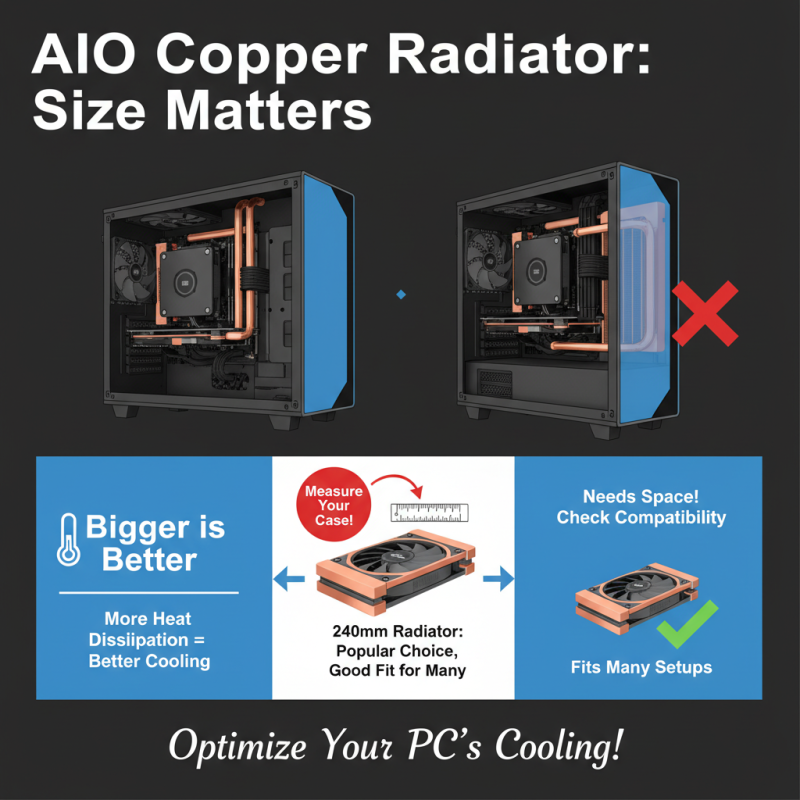
When choosing an AIO copper radiator for your PC, size matters. Larger radiators can dissipate heat more effectively. They allow for better cooling performance, but they need space. Your PC case must accommodate the radiator’s dimensions. Measure your case before buying. A popular choice is a 240mm radiator, which fits well in many setups.
Configurations also play a crucial role. Dual-fan setups provide enhanced airflow. But they can be noisy. A single 120mm fan may be quieter, but might not cool as efficiently. Think about your priorities. If you value silence, opt for fewer fans. Some configurations offer RGB lighting, adding flair to your build. It's about balancing aesthetics and performance.
Consider your usage too. Gamers might need more cooling power. On the other hand, casual users may not. Review your needs before settling on a design. Each component affects overall cooling, so reflections on performance are essential. There’s no perfect choice, just what fits you best.
Compatibility Considerations for AIO Copper Radiators with Your PC Build
When choosing an AIO copper radiator, compatibility is key. The size of your case matters. Many mid-tower cases support radiators up to 280mm. However, some compact builds can't accommodate this. Check your case specifications carefully. In fact, according to industry reports, around 30% of users face compatibility issues due to incorrect radiator sizes.
The mounting points must align with your motherboard. Ensure your CPU socket type matches the cooler's design. This detail often gets overlooked. A recent survey revealed that nearly 20% of users experienced installation challenges due to these mismatches. The next consideration is airflow direction. Proper airflow can make a significant difference in cooling performance. Poor alignment can lead to overheating, affecting system stability.
Lastly, the pump design impacts overall performance. AIO units with higher RPM ratings often provide better cooling. However, they can be noisier. A balance needs to be struck between noise and performance. Regular maintenance is also essential. Dust accumulation in radiators can hinder effectiveness. It's a cycle that requires periodic checks and cleaning, which many users neglect.
2026 How to Choose the Best Aio Copper Radiator for Your PC? - Compatibility Considerations for AIO Copper Radiators with Your PC Build
| Dimension |
Value |
| Radiator Size |
240mm |
| Material |
Copper |
| Fan Size |
120mm |
| Cooling Performance |
Excellent |
| Noise Level |
Low |
| Compatibility |
Intel & AMD |
| Warranty Period |
5 Years |
Top Brands and Models of AIO Copper Radiators to Consider in 2026
When considering an AIO copper radiator for your PC in 2026, focus on the build quality and performance. Many cooling solutions on the market feature copper as a primary material. It's essential because copper has excellent thermal conductivity. Models vary widely, so research is critical.
Keep an eye on the size and compatibility. Ensure the radiator fits your case and motherboard. Some models may be more compact but less efficient. Bigger isn't always better, but it often means more cooling power. Check for reviews to gauge real-world performance, as specifications can be misleading.
Tips: Look for user feedback. This provides insight into reliability over time. Don’t just rely on the marketing. Consider the warranty and support. These factors reflect a brand's confidence in their product. A radiator that's easy to maintain can save hassle later. Always weigh your options—there's no perfect choice. Balancing performance, price, and aesthetics is crucial. Keep in mind, every radiator has its strengths and weaknesses. You may need to compromise on some aspects to find the ideal fit for your system.