Leave Your Message
- Phone
- E-mail
- Whatsapp

China has become a major sourcing base for curved display technology, serving electronics, automotive, gaming, medical, and commercial signage markets. Its manufacturers offer more than attractive pricing. They provide panel engineering, enclosure integration, optical testing, and production scalability.
Market reports show continuing demand, although their estimates differ. Grand View Research values the global curved display market in the multi-billion-dollar range and expects steady growth through 2030. Fortune Business Insights also forecasts expansion, driven by smartphones, gaming monitors, televisions, and vehicle interfaces. These figures should be read carefully. Definitions vary between reports, especially when curved OLED panels, curved LCD monitors, and complete display systems are counted together.
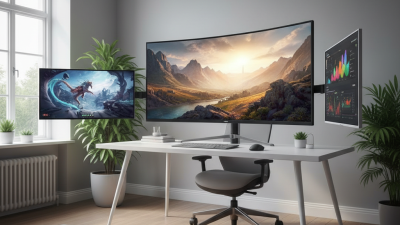
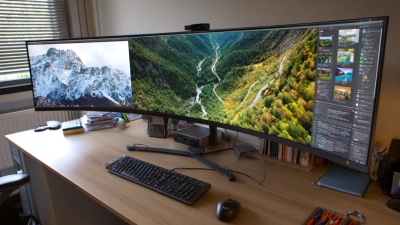
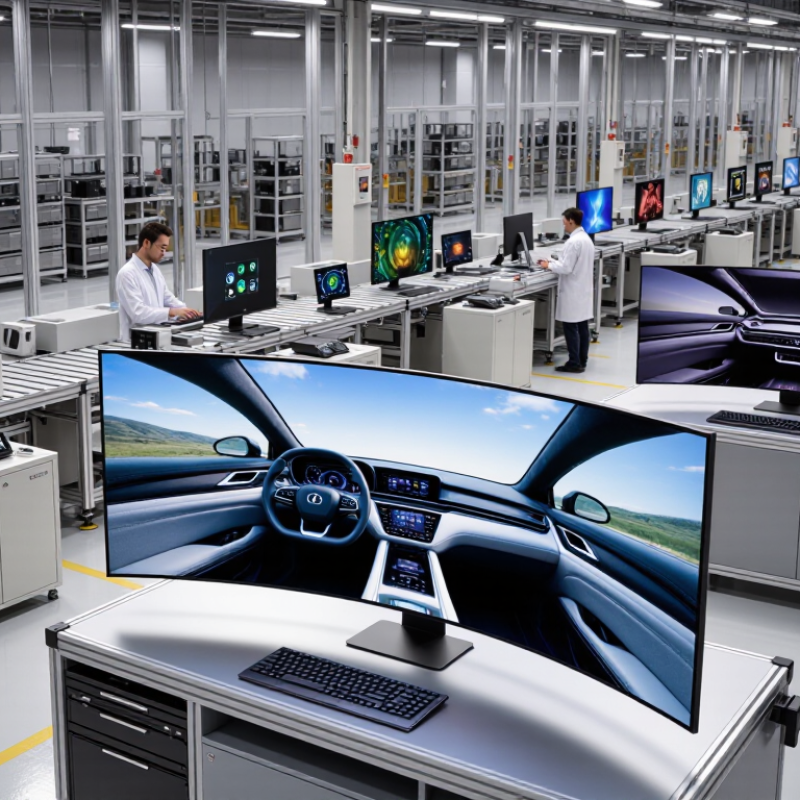
The opportunity is visible on the factory floor. A buyer may inspect a 34-inch ultrawide monitor, check edge brightness, and compare a 1,000R radius with a flatter 1800R design. Small details matter. Uniformity matters more. Omdia’s display research highlights the growing importance of OLED and advanced display applications, while vehicle manufacturers continue requesting larger, more integrated cockpit screens. Chinese suppliers are responding with customized curvature, high-refresh-rate panels, touch functions, and automotive-grade validation.
Still, choosing a supplier requires more than reading a catalog. Claims about brightness, lifetime, color accuracy, and defect rates need documented testing. ISO-certified quality systems, traceable samples, burn-in procedures, and transparent warranty terms provide stronger evidence. Some manufacturers communicate clearly; others leave important technical gaps. This guide examines China’s top Curved Display manufacturers through product capability, manufacturing experience, quality control, export reliability, and buyer support. The goal is practical comparison, not exaggerated promotion.
China Top Curved Display Manufacturers for Global Buyers
A top curved display manufacturer is defined by more than a smooth glass surface. Engineering control matters. The factory should manage curvature radius, panel tension, brightness uniformity, and edge distortion during mass production. TrendForce estimated global monitor shipments at about 126.8 million units in 2023. That scale creates pressure for stable output, not attractive samples only.
Reliable manufacturers provide traceable testing records. Look for thermal cycling, humidity exposure, dead-pixel inspection, and repeated power-on tests. DSCC’s 2024 OLED Display Market Outlook identifies automotive and IT applications as important OLED growth areas. This suggests stronger demand for flexible, curved, and customized panels. Yet, a supplier’s report is not proof by itself. Ask for third-party certifications, sample inspection results, and recent yield data. In my experience, small differences at the curved edge can become visible after installation. A low defect rate is impressive, but it is not the whole story.
Tips: Request a pilot batch before signing a large order. Check the same model at 25%, 50%, and maximum brightness. Compare color temperature, viewing angles, and bezel alignment. Confirm warranty terms, spare-part availability, packaging tests, and response times. Some factories communicate well before payment, then become slower during corrective work. That is a warning worth recording.
| Evaluation Dimension | Industry-Relevant Benchmark | Why It Matters to Global Buyers | Recommended Verification Evidence |
|---|---|---|---|
| Curvature Options | Common monitor curvature options include 1000R, 1500R and 1800R; lower R values indicate a tighter curve. | Supports different viewing distances, screen sizes and ergonomic preferences. | Approved product drawings, curvature measurement records and pre-shipment inspection reports. |
| Display Size Coverage | Typical curved display formats range from approximately 24 to 49 inches, depending on the application. | A broad size range helps buyers source office, gaming, entertainment and professional display products from one supply base. | Current product matrix, panel specifications and sample availability by screen size. |
| Resolution Capability | Common resolutions include Full HD, QHD and 4K UHD; ultrawide models may use 3440 × 1440 or 5120 × 1440 formats. | Resolution affects image sharpness, productivity space and suitability for content creation or gaming. | Panel datasheets, native-resolution test results and pixel-defect inspection records. |
| Refresh Rate Range | Office-oriented products commonly use 60–100 Hz, while gaming-oriented products may support 144 Hz, 165 Hz, 240 Hz or higher. | Higher refresh rates can provide smoother motion when the source device and connection standard support them. | Instrument-based refresh-rate testing, interface compatibility data and firmware records. |
| Response-Time Control | Published response times often range from 1 ms to 5 ms, but the measurement method must be clearly stated. | Clear test methodology helps buyers distinguish marketing claims from repeatable performance. | Gray-to-gray test conditions, overdrive settings and independent sample validation. |
| Color Performance | Mainstream products may target sRGB coverage, while professional models may specify wider-gamut coverage such as DCI-P3. | Color coverage and accuracy are important for design, video, photography and consistent regional distribution. | Colorimeter reports, factory calibration files and stated Delta E test conditions. |
| Connectivity Design | Relevant interfaces may include HDMI, DisplayPort, USB-C, USB hub functions and audio output, subject to model configuration. | Suitable ports reduce regional compatibility problems and improve installation convenience. | Port layout drawings, signal-support tests and compatibility testing with target devices. |
| Quality Management | A mature supplier should operate documented incoming, in-process and final inspection procedures, commonly under an ISO 9001-based quality system. | Process control improves consistency across production batches and reduces field-return risk. | Valid certificates, inspection plans, calibration records and traceable quality reports. |
| Export Compliance | Depending on the destination, products may require applicable EMC, electrical-safety, energy-efficiency and restricted-substance compliance documentation. | Correct documentation helps prevent customs delays, listing problems and regulatory non-compliance. | Destination-specific test reports, declarations, labels and technical files. |
| Customization Capability | Potential customization areas include enclosure color, stand design, firmware, menu language, packaging, logo placement and regional power accessories. | Customization enables channel differentiation and better alignment with local market requirements. | Engineering change process, prototype samples, approved artwork and tooling-cost schedule. |
| Production Capacity | Capacity should be assessed by confirmed monthly output for the specific curved-display model, not by factory-wide claims. | Verified capacity supports reliable launch planning and reduces delivery uncertainty during seasonal demand. | Model-level capacity plan, production schedule, lead-time history and factory audit findings. |
| Packaging and Logistics | Protective packaging should address curved-panel impact risks and include pallet, carton and moisture-control requirements appropriate to the shipping route. | Packaging quality directly affects damage rates, insurance claims and total landed cost. | Packaging drop-test records, carton specifications, loading photos and damage-rate data. |
| Warranty and After-Sales Support | A professional supply program should define warranty duration, dead-pixel policy, repair or replacement process, spare-parts availability and response times in writing. | Transparent after-sales terms reduce operational risk for distributors and online sellers. | Signed warranty terms, service workflow, escalation contacts and historical claims data. |
| Total Cost Transparency | A reliable quotation should separate product price, tooling, packaging, certification, freight terms, payment conditions and replacement-part costs. | A complete cost structure enables accurate landed-cost comparison rather than price-only evaluation. | Itemized quotation, Incoterms, validity period, payment schedule and written change-order policy. |