Leave Your Message

China Top 10 Cooling System Manufacturers for Global Buyers

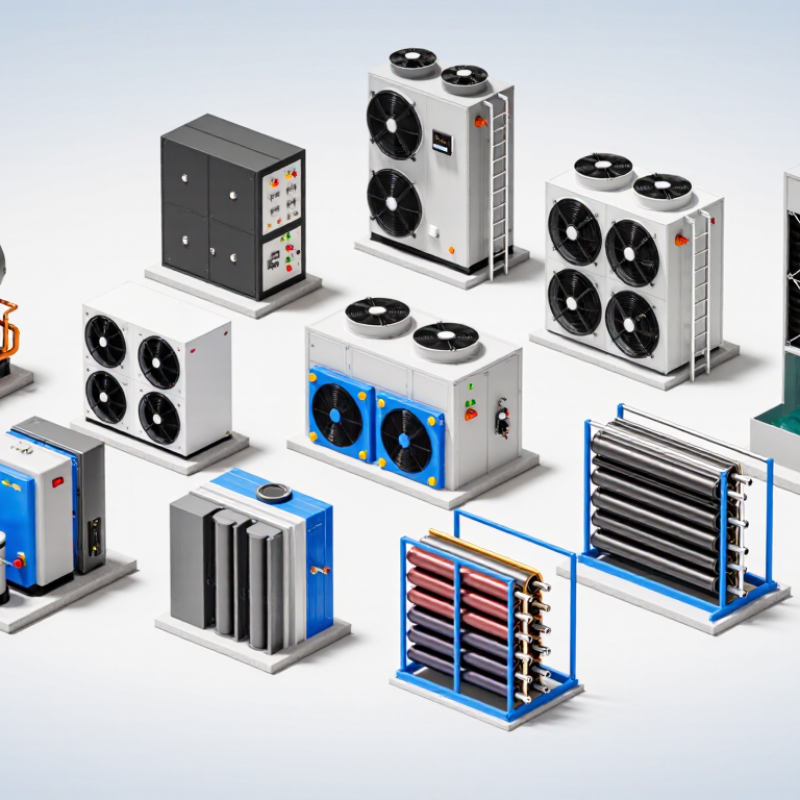
For global buyers, choosing a cooling supplier involves more than comparing prices. China’s Cooling System Manufacturers serve varied markets, from commercial HVAC and industrial equipment to data centers and vehicle applications. Their products may include chillers, heat exchangers, cooling towers, and liquid-cooling units. These systems differ in capacity, materials, controls, and maintenance needs.

Small details matter. A unit’s stated cooling capacity may not reflect performance in a hot, humid factory or a dusty workshop. Buyers should check operating conditions, energy use, component specifications, test records, and available service support. Ask for drawings, performance data, and references for installations with similar requirements. Then compare response times and spare-parts availability, not just the initial quotation.

This guide introduces ten Chinese manufacturers for international buyers to evaluate. It is a starting point, not a guarantee that one supplier fits every project. Company capabilities and product ranges can change, and a strong brochure cannot replace technical verification. Some buyers may also find that a lower purchase price brings extra coordination or service costs. That trade-off deserves attention. Review each candidate’s relevant experience, quality processes, export support, and ability to meet your specifications. Confirm certifications against the requirements of your destination market, and request written answers to unresolved questions. Careful checks make supplier discussions more useful—and help turn a shortlist into a practical decision.
China Top 10 Cooling System Manufacturers for Global Buyers

Cooling System Types and Their Global Applications

Cooling systems are not one-size-fits-all; climate, heat load, water access, and maintenance skills shape the right choice. Air-cooled units reject heat through fans and coils, making them practical for dry sites, small factories, and buildings where water is scarce.

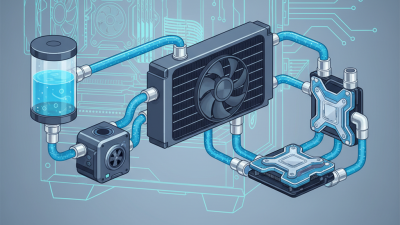
Liquid cooling moves heat through a circulating fluid. It suits high-density data rooms, medical equipment, and industrial processes with concentrated heat. Compact, but demanding. Leaks, pump wear, and water quality need regular checks.

Evaporative cooling can reduce energy use in hot, dry regions, but performs less effectively as humidity rises. Large commercial buildings may combine chillers, cooling towers, and air handlers to respond to changing occupancy and outdoor temperatures. Refrigerated transport and cold-storage facilities need stable temperatures, sound insulation, and backup plans when doors open often or power is interrupted.

Those details matter.

District cooling serves groups of buildings from a central plant, simplifying on-site equipment but relying on dependable distribution and skilled operators. Selection should reflect measured heat loads and local conditions, not a catalogue label alone; even a sound design can disappoint when maintenance plans are vague.

Key Criteria for Evaluating Chinese Cooling System Manufacturers

When evaluating Chinese cooling system manufacturers, compare verified performance, not headline capacity alone. A unit rated for a certain heat load may behave differently in a hot workshop or with restricted airflow. Ask for test conditions, coolant flow, pressure drop, noise levels, and operating-temperature ranges. Request drawings and test records for the configuration you plan to buy. Details matter. A mismatch in pipe connections can delay installation, even when the core system performs well. Check whether engineers can explain their assumptions clearly and revise a design when your site conditions differ.

Manufacturing consistency deserves equal attention. Ask how incoming materials, welds, seals, and finished units are inspected, and whether serial numbers link products to production records. If corrosion is a concern, discuss the actual fluid and environment rather than accepting a generic material claim. Review sample inspection reports, relevant quality certifications, spare-parts lead times, and warranty procedures. A factory visit or independent inspection can reveal practical issues, such as crowded assembly areas or unclear test procedures. Not every buyer can visit, of course. In that case, request a live production review and consider a pilot order before scaling up. A spreadsheet still misses things. Check how quickly the supplier answers a technical question, too; slow or vague replies may become a real service problem.

Ten Chinese Cooling System Manufacturers Serving International Buyers

China Top 10 Cooling System Manufacturers for Global Buyers

Ten Chinese cooling system manufacturers can serve international buyers across industrial, commercial, and equipment applications. Their offerings may include chillers, heat exchangers, cooling towers, and custom assemblies. A “top ten” list is best treated as a shortlist, not a universal ranking. The right supplier depends on operating conditions, service access, and project requirements.

For a practical comparison, share the required cooling capacity, inlet and outlet temperatures, ambient conditions, and installation limits. Ask for performance data under comparable test conditions, plus drawings, quality checks, and export-packing details. Check how the manufacturer handles spare parts and technical questions after delivery. A polished catalog is not proof of performance. One detail buyers sometimes miss is local service availability; a sound unit can still cause delays when a replacement part takes weeks to arrive.

Tips: Request a sample inspection or a live production walkthrough. Compare written specifications, not just price. Keep one assumption open for review: your actual heat load may differ from the estimate, so confirm it before placing an order.

China Top 10 Cooling System Manufacturers for Global Buyers - Ten Chinese Cooling System Manufacturers Serving International Buyers

The entries below are anonymous, product-specialty profiles rather than verified records of ten specific companies. Product availability, performance, certifications, and export experience vary by supplier and should be confirmed directly.

Anonymous Profile Product Specialty Cooling Method Common Applications Key Checks for International Buyers
Profile 1 Industrial chillers Vapor-compression refrigeration; air-cooled or water-cooled configurations are available in the market. Process cooling, manufacturing equipment, and commercial facilities. Cooling capacity at stated design conditions, refrigerant, operating limits, electrical requirements, and applicable local regulations.
Profile 2 Air-cooled chiller systems Heat is rejected to outdoor air through a condenser coil and fans. Sites where a cooling-tower water loop is not preferred or available. Ambient-temperature performance, sound levels, airflow clearance, energy data, and refrigerant compliance.
Profile 3 Water-cooled chiller systems A water circuit carries heat from the chiller condenser, commonly to a cooling tower or another heat-rejection system. Central plants and larger commercial or industrial installations. Condenser-water conditions, water treatment needs, installation requirements, efficiency ratings, and service access.
Profile 4 Cooling towers Evaporative heat rejection transfers heat from circulating water to the air. Chiller plants, industrial process loops, and other water-cooled systems. Design wet-bulb conditions, water flow, drift control, materials, maintenance access, and local water-use requirements.
Profile 5 Dry coolers A fluid circuit rejects heat through a finned coil and fans without evaporative cooling in the heat-rejection process. Closed-loop process cooling and facilities seeking to limit evaporative water use. Fluid type, design temperatures, ambient conditions, fan power, noise, and freeze protection.
Profile 6 Plate heat exchangers Heat transfers between separate fluid circuits through thin plates; the fluids remain separated in normal operation. Chiller interfaces, district-energy systems, and industrial heating or cooling loops. Design pressure and temperature, fluid compatibility, materials, connection standards, and required duty.
Profile 7 Data-center liquid-cooling equipment Liquid cooling may use facility-water loops, coolant distribution units, or direct-to-chip circuits, depending on system design. Server rooms and data centers with liquid-cooled IT equipment. IT-side interface requirements, flow and temperature limits, leak detection, controls integration, and redundancy design.
Profile 8 Air-handling and fan-coil equipment Fans move air across chilled-water or refrigerant coils to provide space cooling. Commercial buildings, hotels, offices, and other HVAC installations. Airflow, external static pressure, coil conditions, filtration, sound data, controls, and applicable building codes.
Profile 9 Radiators and charge-air coolers Heat transfers from engine coolant or compressed intake air through a heat exchanger to ambient air. Vehicles, off-highway machinery, and industrial engines. Dimensional fit, pressure and vibration requirements, materials, corrosion protection, and application-specific testing.
Profile 10 Refrigeration condensing units A compressor and condenser reject heat from a vapor-compression refrigeration cycle; the exact assembly varies by application. Cold rooms, food storage, and commercial refrigeration systems. Refrigerant and charge requirements, design temperatures, electrical supply, safety compliance, and compatibility with the complete system.

Before purchasing, request current technical datasheets, test documentation, applicable certificates, warranty terms, spare-parts information, and confirmation that the proposed equipment meets the destination country's requirements.

Comparing Product Portfolios, Certifications, and Export Capabilities

China’s cooling-system suppliers serve different needs, from chillers and cooling towers to heat exchangers and packaged units. Compare capacity ranges, refrigerant options, part-load efficiency, and maintenance access—not brochure claims alone. The IEA estimated that space cooling used about 2,000 TWh in 2016, roughly 10% of global electricity (The Future of Cooling, 2018). That makes operating efficiency commercially important. Small details matter.

For a top-ten comparison, verify ISO 9001 and ISO 14001 certificates, then confirm that market-specific conformity documents cover the exact model. Ask for test conditions, warranty terms, spare-part lead times, and recent export references. Multilingual manuals and accurate packing lists are useful checks. The UNEP report Global Cooling Watch 2023 projects that global cooling capacity could more than triple by 2050. Certificates alone do not prove field performance. Request test records or comparable installation evidence. Supplier documentation can be uneven, so note gaps rather than treating every claim as equivalent.

How to Select a Manufacturer for Your Cooling System Project

Selecting a cooling-system manufacturer starts with the project’s operating conditions, not a catalogue. Document the required capacity, inlet-water temperature, ambient range, operating hours, and available footprint. A system sized only for peak load may cycle inefficiently during mild weather.

The IEA’s The Future of Cooling (2018) reports that space-cooling energy demand exceeded 2,000 TWh in 2016, about 10% of global electricity use. That makes verified part-load performance important, not just headline capacity.

Ask for test conditions and performance curves. Ask for evidence.

Check how the manufacturer validates equipment: request factory test records, material specifications, and references from installations with similar loads and climates. Compare energy use, maintenance intervals, spare-part availability, and warranty limits across the expected service life. For water-cooled equipment, clarify water-quality requirements and cleaning access; a tightly packed coil can be difficult to maintain. Ask who handles commissioning and how response times work in your region. No checklist catches everything. I would also ask for a sample service report, because polished sales documents rarely show what happens after an alarm or a missed performance target. Verify that stated efficiency figures match the configuration being quoted. Do not assume a technically strong factory can provide dependable local support.